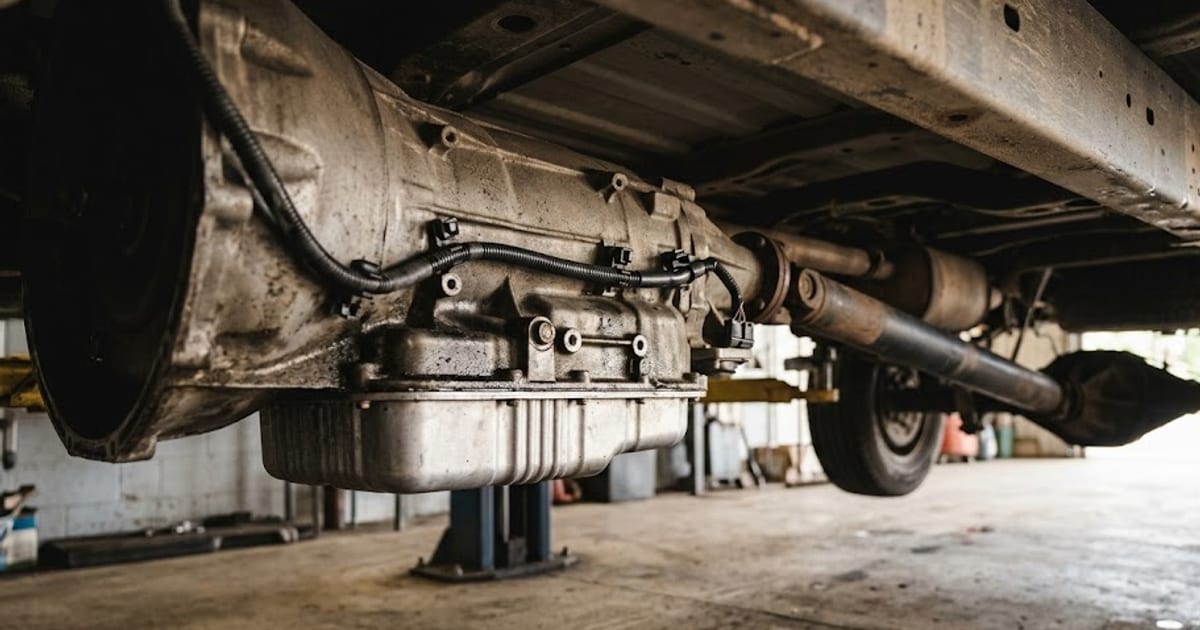
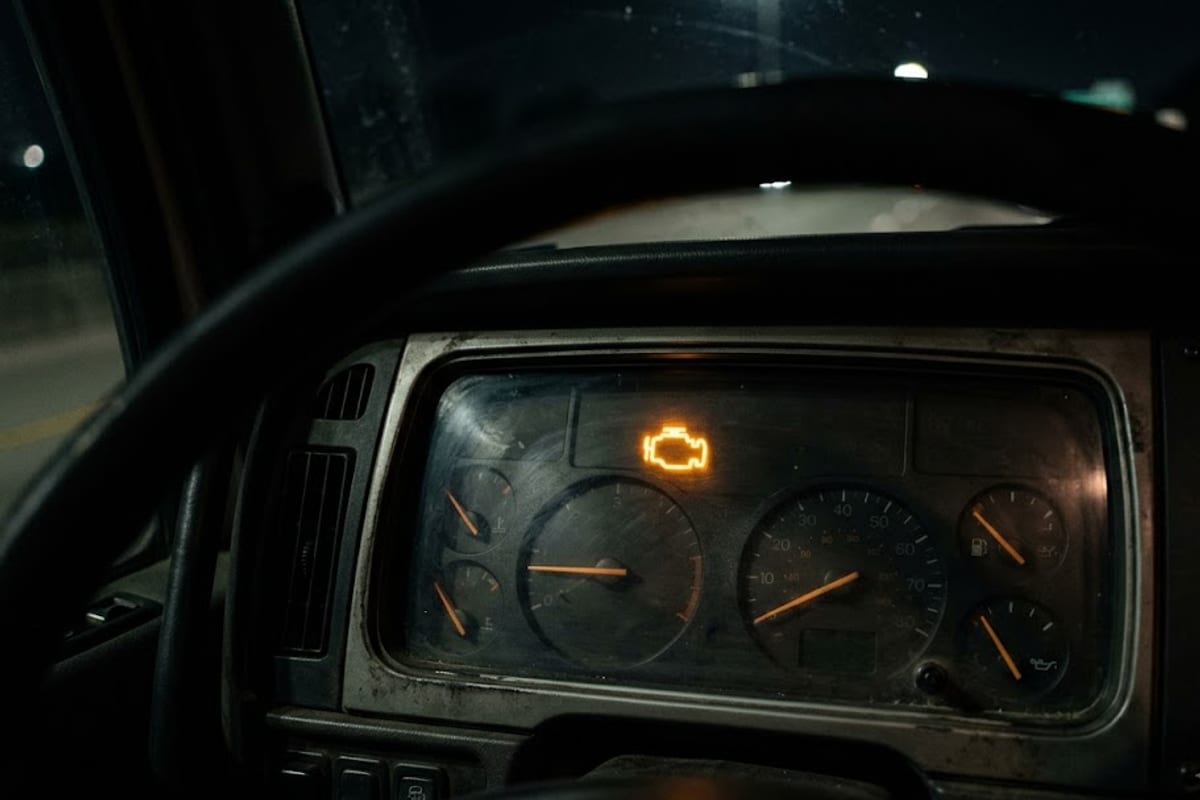
P0802 means there is a fault in the circuit or message the transmission control module uses to ask for the malfunction indicator lamp, the check engine light. The generic definition is "Transmission Control System MIL Request Circuit/Open." Under OBD rules, a transmission fault that affects emissions must light the same lamp as an engine fault, and on most vehicles only the engine computer controls that lamp. The transmission computer therefore has to ask for it. P0802 says that request path has failed or, on some vehicles, that the engine computer is seeing an incorrect voltage on it.
Severity: moderate. Can you keep driving? Usually yes, but read the other codes. P0802 on its own does not affect how the transmission shifts. The concern is what it hides: if the transmission computer cannot request the lamp, a real transmission fault may not be announced properly. Always read the transmission module's own codes when P0802 is present.
How the request works
There are two common designs. On older vehicles, and on some heavy-duty trucks, the transmission module has a dedicated wire to the engine computer. When it wants the lamp on, it changes the voltage on that wire. The engine computer watches the wire and sets P0802 if the voltage is wrong, for example if the wire is open or shorted.
On newer vehicles the request is a message on the data network. The engine computer expects a regular status message from the transmission module, including a flag that says whether the lamp is wanted. If the exchange fails, the engine computer can store P0802 or a network code, depending on the manufacturer.
Why it turns up on GM diesel trucks
P0802 is searched most often by owners of Chevrolet Silverado and GMC Sierra heavy-duty trucks with the Duramax diesel and the Allison 1000 transmission, a combination that uses a separate transmission control module. Technicians who work on these trucks describe a consistent pattern: the code sets when the engine and transmission computers fail to complete their start-up exchange, and the usual reason is a voltage drop during cranking that briefly resets one module.
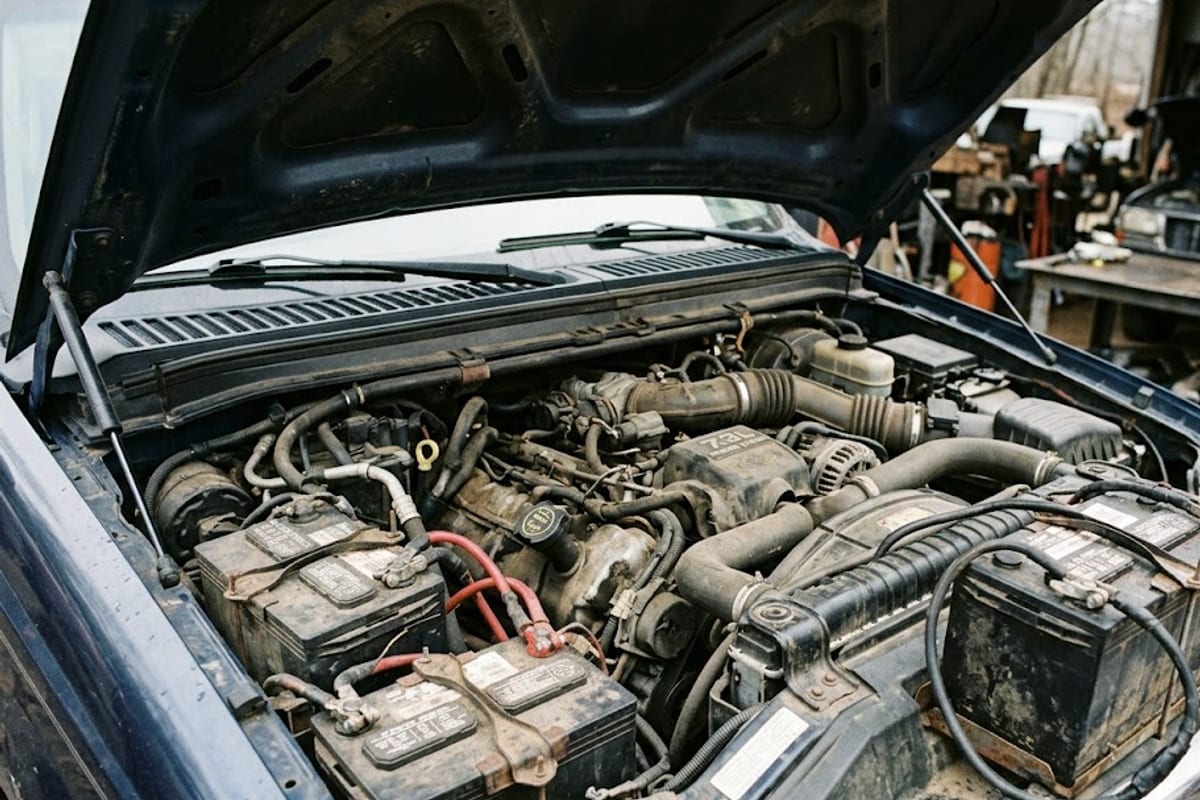
A diesel starter draws a great deal of current, which is why these trucks carry two batteries. If one battery is weak, or one of the many cable connections is poor, voltage sags hard while the engine turns over. The module that browns out first misses the start-up exchange with the other, and the engine computer records a fault on the request path. The transmission itself is fine.
What to check, in order
- Read codes from the transmission module as well as the engine computer. If the transmission module stores its own fault codes, deal with those first; they are the reason the lamp was needed.
- Test both batteries separately. On a two-battery truck, disconnect them from each other and load test each one. A single weak battery is enough to cause the problem, and a voltmeter across the pair will hide it because the good battery props up the reading.
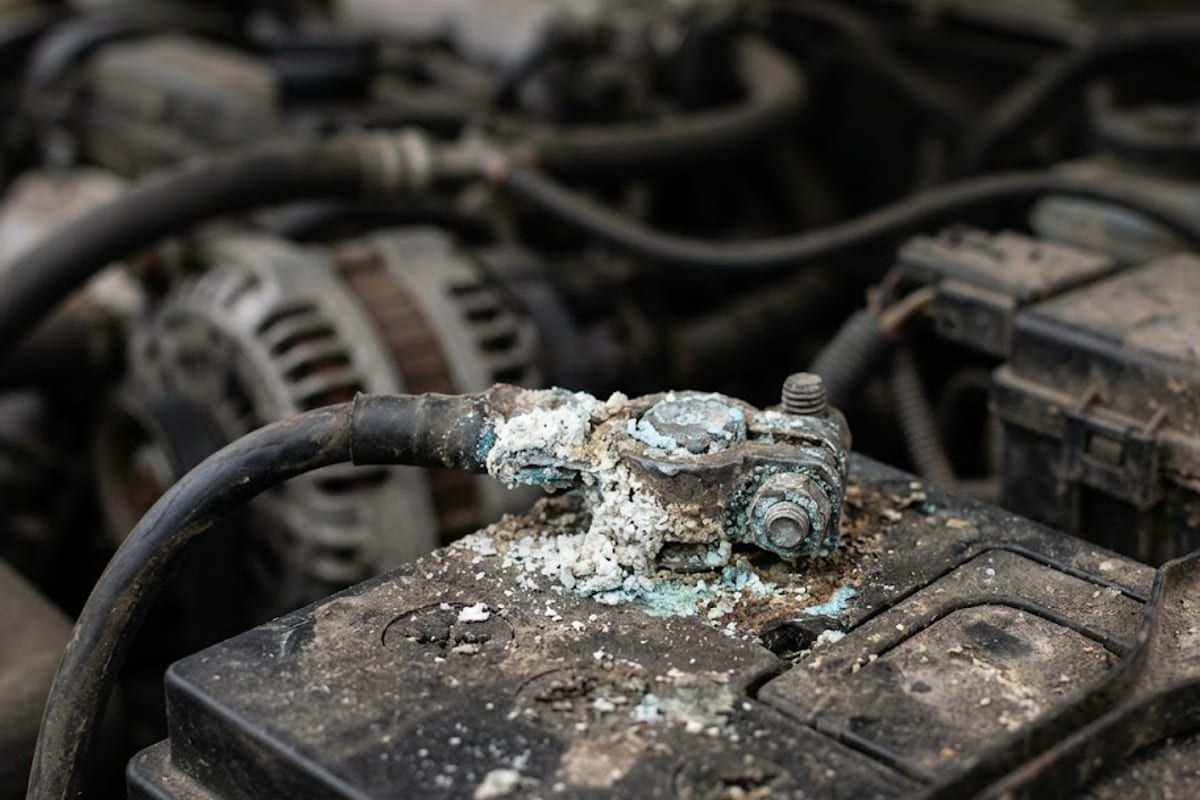
- Clean and tighten every battery and ground connection. That includes both battery terminals on each side, the cable between the batteries, the engine and body ground straps and the transmission module ground. Corrosion under a clamp that looks tight is a common finding.
- Watch voltage during cranking. A meter with a minimum-hold function at the battery and again at the transmission module's power feed shows how far voltage drops while the engine turns over. A large difference between the two points to resistance in the wiring or a connection in between.
- Check the ignition feed to both modules. An ignition switch that drops out during cranking can cut power to one module and not the other.
- Check the request wire or network wiring between the modules. On trucks with a dedicated wire, check it end to end for continuity and for shorts. On network-based trucks, check the connectors at both modules.
- Consider the modules last. Replacing a transmission or engine computer for P0802 without proving power, ground and wiring rarely fixes it, and both need programming.
P0802 and its neighbours
P0802 sits in the P08xx group, which covers transmission control system codes. Its closest relatives are P0700, which the engine computer stores when the transmission module has requested the lamp for a transmission fault, and P0803, which relates to the skip-shift and upshift request circuit on some manual transmissions. If you see P0700 and P0802 together, the request path is working intermittently, which again points to power, ground or connections.
Owners sometimes search for P0802 alongside P0807. They are unrelated: P0807 is a clutch position sensor circuit code on manual transmissions.
After the repair
Clear the codes, then start the truck several times from cold and warm, watching for the code to return. Because the fault usually happens during cranking, a single test drive without restarts can make a repair look successful when it is not. The guide to clearing codes and readiness monitors explains what else resets when you clear, and pending, stored and permanent codes explains why a code can reappear on the scan tool before the lamp comes back on.
A cranking voltage test you can do yourself
You need a digital multimeter, ideally one that records the minimum reading. Connect it across one battery, set it to record the minimum, and have someone crank the engine for a few seconds. Repeat on the other battery. Then measure across the transmission module's power feed and ground while cranking, if you can reach them safely.
What you are looking for is a difference. Two batteries that sag to similar voltages point to the batteries or starter as a pair. One battery that drops much further than the other points to that battery or its cables. A module feed that drops well below the battery voltage points to a poor connection, a corroded fuse terminal or a weak ground between the battery and the module. Any of those is enough to make the transmission module reset during the start-up exchange.
Why the code can appear with no other symptom
Because P0802 is about a message rather than the gearbox itself, the truck may drive perfectly with it stored. The engine computer lights the check engine lamp because it can no longer confirm the transmission's status, not because anything is wrong with the gears. That is exactly why it is worth fixing: until it is, a genuine transmission fault may arrive without its own warning.
Frequently asked questions
Can I drive with P0802?
Usually. It does not change how the transmission works, but it can stop real transmission faults from lighting the lamp. Read the transmission module's codes before assuming all is well.
Does P0802 mean my Allison transmission is failing?
No. It concerns the communication path between the transmission and engine computers. On Duramax trucks it most often comes from low voltage during cranking.
Can a bad battery cause P0802?
Yes, especially on two-battery diesel trucks. A weak battery or poor connection lets voltage drop during cranking, one module resets, and the start-up exchange between the modules fails.
What is the difference between P0700 and P0802?
P0700 means the transmission computer successfully asked for the lamp because it found a fault. P0802 means the path used for that request has a problem.
Should I replace both batteries on a two-battery truck?
If one has failed a load test and both are the same age, many technicians replace them as a pair, because a new battery wired to a tired one is dragged down by it.
Sources: SAE J2012 code definitions; technician reports on Chevrolet Silverado and GMC Sierra trucks with the Duramax diesel and Allison 1000 transmission.