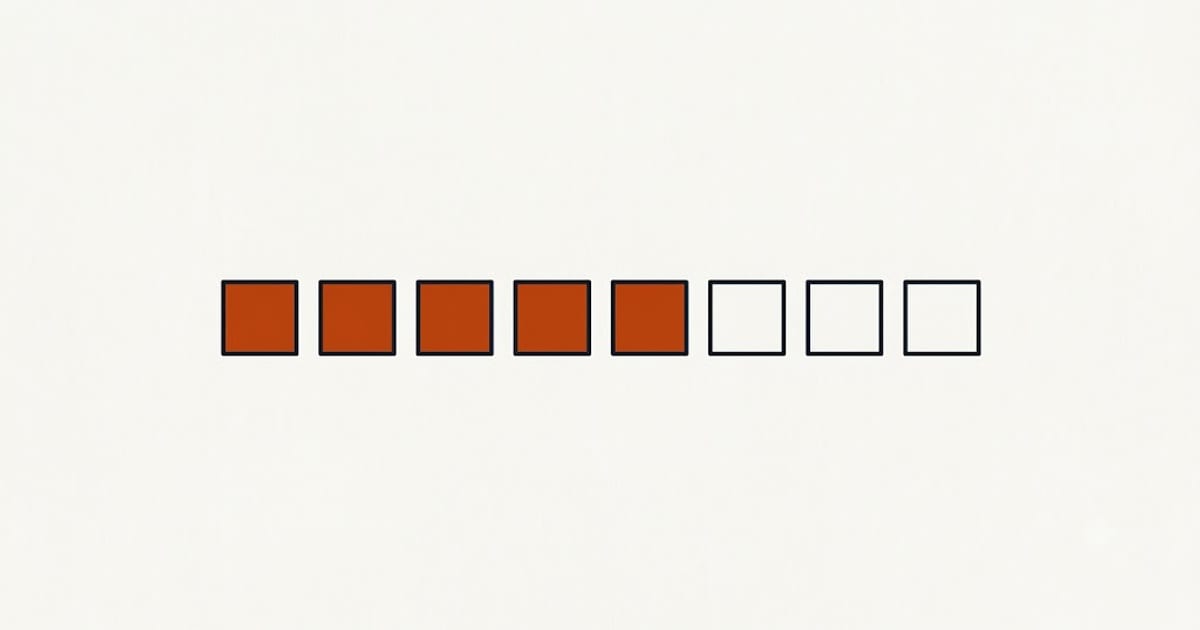
Clearing a code does three things at once, and most people only intend the first.
It turns the warning lamp off. It erases the stored code and its freeze frame. And it resets the readiness monitors — which is the one nobody asks for and the one that causes trouble.
What a readiness monitor is
The engine management runs self-tests on its emissions systems. Not continuously, and not on demand: each test needs specific conditions before it can run at all. The evaporative system test may need a fuel level between roughly a quarter and three quarters, a particular ambient temperature range, and a cold start. The catalyst test needs the engine fully warm and a period of steady cruising.
When a test has run to completion, its monitor reports ready. Until then it reports not ready.
An emissions test reads those monitors. A vehicle with monitors not ready has not proved anything about its emissions systems, so most jurisdictions fail it — or refuse to test it — regardless of whether the warning lamp is on.
Why this catches people out
The sequence is always the same. Warning light comes on. Someone clears the code, or disconnects the battery, and the light goes out. The car goes for its test the next morning with no light showing, and fails anyway.
Nothing went wrong at the test station. The monitors were reset along with the code and have not had the chance to run yet.
How long it takes to set them again
There is no fixed number of miles, because each monitor waits for its own conditions. In practice it usually takes several days of ordinary mixed driving — some cold starts, some steady cruising at speed, some stop-start, and a few hours of the car sitting overnight so the next start is genuinely cold.
Driving fifty miles up a motorway in one go often sets fewer monitors than three normal days of commuting, because a single trip provides only one cold start and one warm-up.
Most jurisdictions allow one or two monitors to be incomplete on older vehicles and none on newer ones. A scanner that reads monitor status — most inexpensive ones do — will tell you where you stand before you pay for a test.
Disconnecting the battery does the same thing
Pulling the negative terminal is the old trick for turning a light off, and it works the same way a scanner does: it wipes the module's stored fault memory, including the monitors.
It also wipes the transmission and idle adaptations on many vehicles, which is why a car can idle roughly or shift oddly for the first few miles afterwards while the module relearns.
If the underlying fault is still present, the code returns as soon as the relevant test runs — sometimes within a mile.
Clear the code only after you have read it
The freeze frame is the most useful diagnostic data the module holds, and it is erased along with the code. Before clearing anything, write down:
- the code or codes, in the order stored
- engine speed and load at the moment it set
- coolant temperature — cold-start faults look very different from warm ones
- short-term and long-term fuel trims
- vehicle speed
Once cleared, that snapshot is gone. If the fault is intermittent, you may wait weeks for another one.
Pending, stored and permanent codes are three different things
A pending code has failed its test once. The module has noticed, but it wants to see the fault again on a subsequent drive cycle before it commits. No lamp yet. Pending codes are the best early warning available and most scanners will show them under a separate menu.
A stored or confirmed code has failed on consecutive cycles. The lamp is on and the freeze frame is saved.
A permanent code is the one that matters here. Introduced specifically to stop people clearing codes before a test, it cannot be erased by a scanner or by disconnecting the battery. It only clears when the module itself has verified, over its own drive cycles, that the fault is genuinely gone. A permanent code will fail an emissions test on its own.
The practical order
- Read the codes, including pending ones, and note the freeze frame.
- Diagnose and repair the actual fault.
- Clear the codes.
- Drive normally for several days, including cold starts and steady cruising.
- Check monitor status with a scanner.
- Only then book the test.
Doing step 3 first and skipping the rest is how a car with no warning light fails an emissions test, and it is one of the more common ways to waste a test fee.