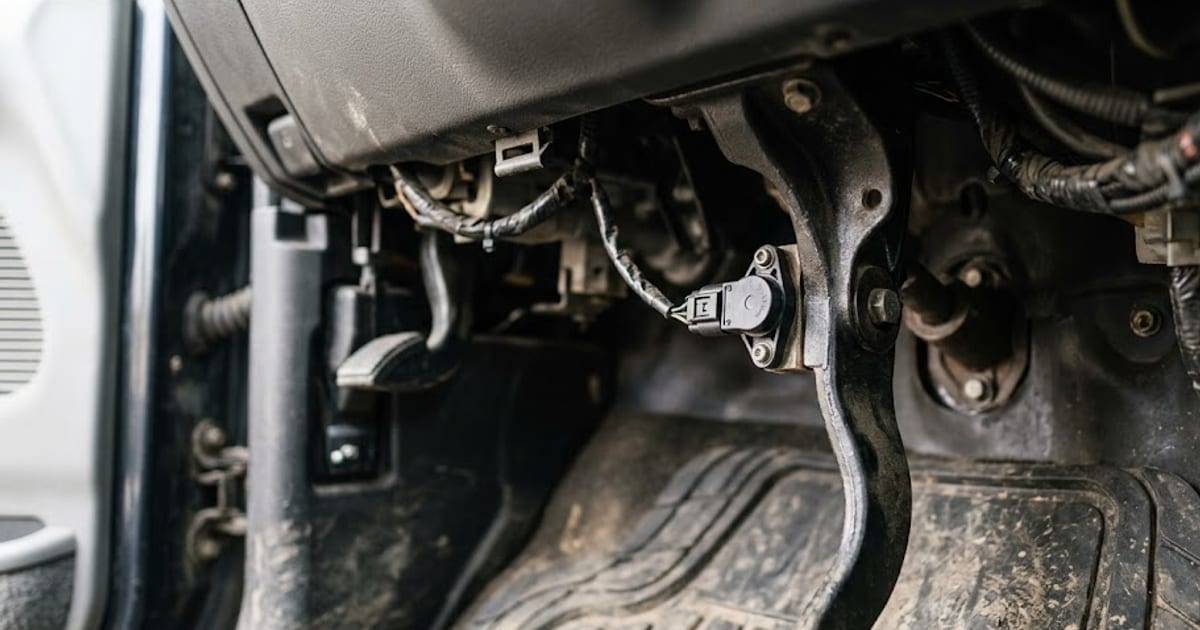
P057C means the computer is seeing a brake pedal position (BPP) sensor signal that is lower than its normal range. The generic definition is "Brake Pedal Position Sensor A Circuit Low." On most vehicles it sets with the check engine light and little else. On 2012 to 2018 full-size General Motors trucks, vans and SUVs it often comes with symptoms that seem to have nothing to do with the brakes: the truck brakes itself on flat roads, feels short of power, or shifts up and down constantly.
Severity: moderate to high. Can you keep driving? Carefully, and not for long. The engine computer uses the brake signal to cut power when both pedals are pressed and to decide when to use engine braking. A wrong brake signal can make the vehicle feel unpredictable, and on some vehicles the cruise control and the start button behaviour depend on it.
What the brake pedal sensor does now
On older vehicles the brake input was a simple switch that turned the brake lights on. Many newer vehicles use a proper position sensor instead, which reports how far the pedal has moved. GM describes the sensor on its full-size trucks as two completely separate sensors inside one housing, each wired like an old throttle position sensor: a 5-volt reference, a low reference and a signal. That makes six wires in total. Three go to the body control module, which runs the brake lights. The other three go to the engine computer, which uses the signal for the brake override feature, grade braking, cruise control and transmission shift decisions.
P057C is set by the engine computer when the signal on its own circuit drops below the range it expects. The brake lights may work perfectly at the same time, because they are fed from the other half of the sensor.
What GM's bulletins say is going on
GM published a series of preliminary information bulletins on this, the most recent being PIT5206F from October 2017, covering the 2012 to 2018 Cadillac Escalade, Chevrolet Avalanche, Express, Silverado, Suburban and Tahoe and GMC Savana, Sierra and Yukon. The owner complaints listed are unwanted grade braking when not going down a grade, reduced engine power with no message on the driver information centre, and busy or frequent up and down shifts. The bulletin says codes P057B, P057C and P057D may or may not be set.
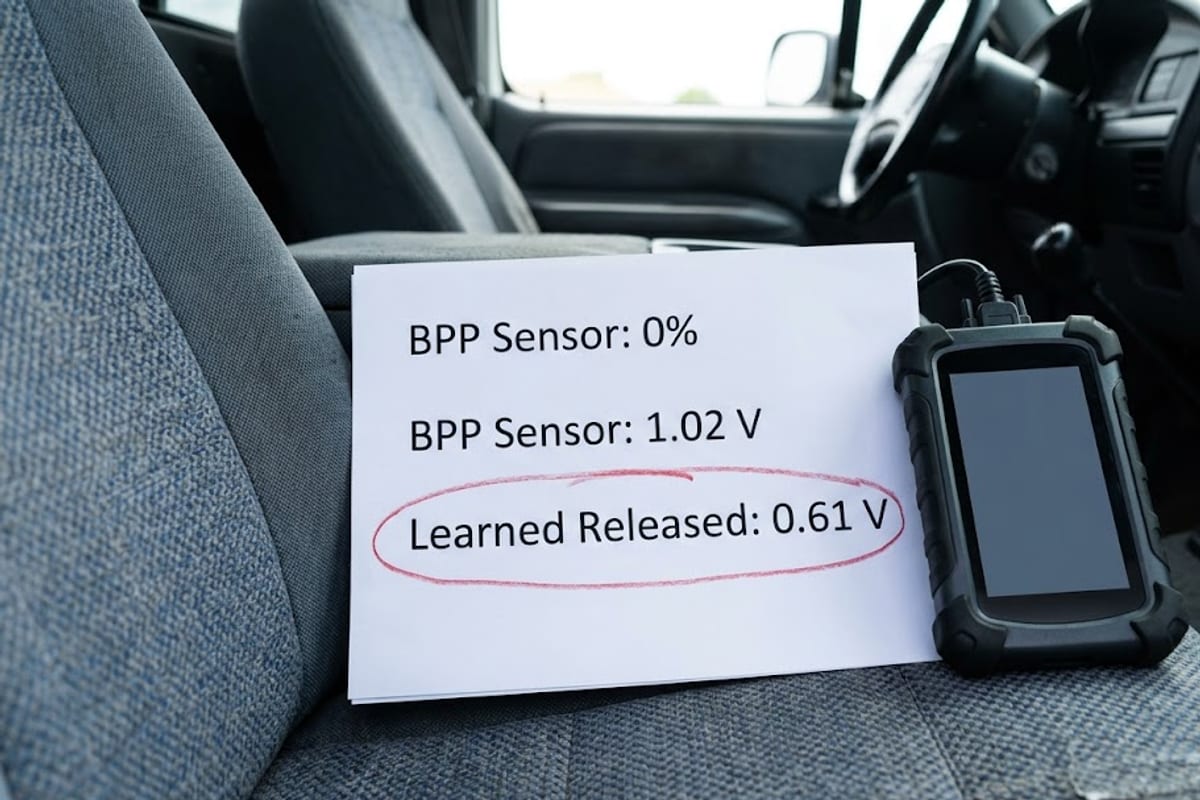
The explanation is worth understanding because it is the reason simple fixes do not last. With the brake pedal released, the engine computer learns the sensor voltage and stores it as the "released" position. GM says a typical released voltage is about 1 volt, plus or minus 0.3 volt. The computer then keeps watching for a voltage lower than the one it learned. If a poor connection makes the signal dip below the learned value for a moment, the computer learns the new, lower value as "released."
When the connection recovers, the real released voltage is back to normal, but it is now above the stored value. GM's example is a learned value of 0.61 volt against an actual reading of 1.02 volts with the pedal released. The computer interprets that difference as the brake pedal being pressed. That is what produces the grade braking, the power cut and the busy shifting.
How to check it with a scan tool
GM's bulletin gives the data to look at. On a scan tool, open the engine control module data list for automatic transmission data and find these parameters:
- BPP Sensor (%) should read 0% with the pedal released.
- BPP Sensor (Voltage) should be around 1 volt, within 0.3 volt, with the pedal released.
- BPP Sensor Learned Released Position should equal the actual sensor voltage with the pedal released.
If the learned value is noticeably lower than the actual voltage with your foot off the pedal, you have found the mechanism. Not every engine shows all three parameters, so work with the ones your vehicle has.
Why a relearn alone does not fix it
Performing the engine computer's brake pedal relearn will make the numbers match again and the symptoms will go away. If the wiring fault that caused the dip is still there, the next dip teaches the computer the wrong value again and the problem returns. GM warns that technicians have replaced engine computers because it looked as though the computer was not remembering the learned value, when the real cause was an intermittent connection.
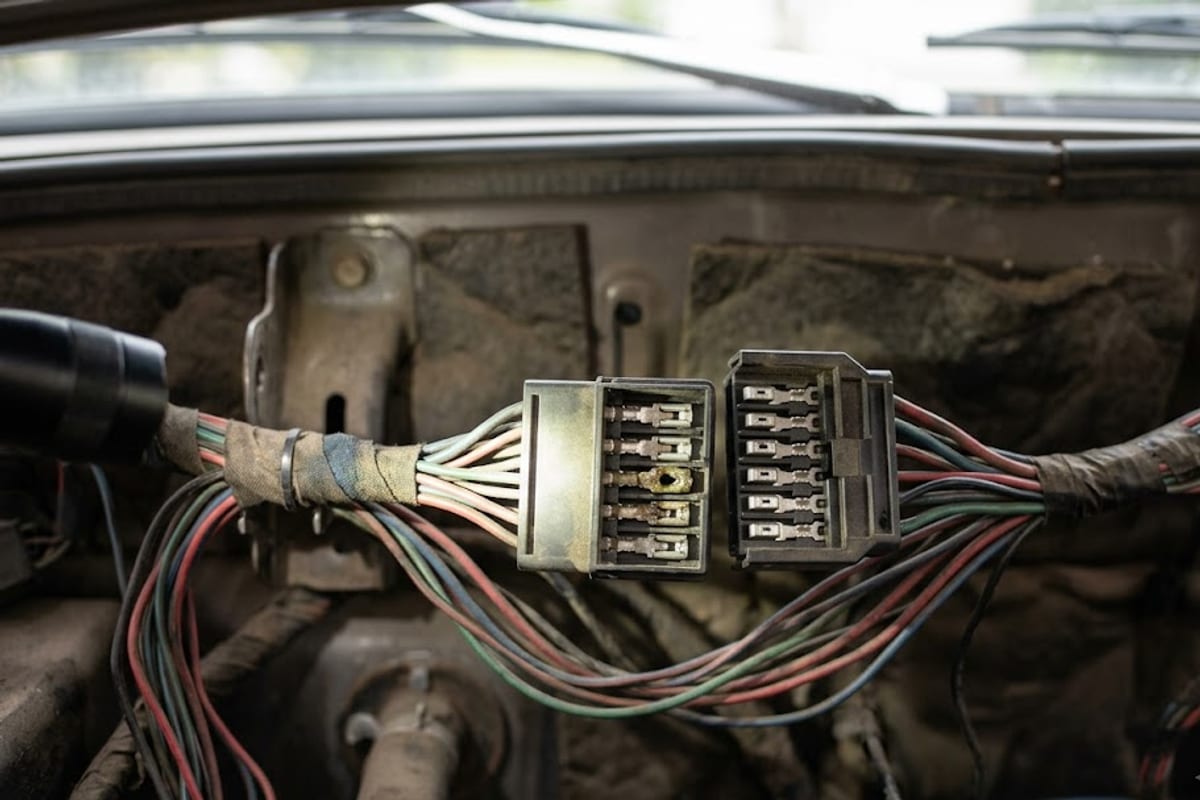
GM says the cause is typically on the sensor's 5-volt reference circuit or its signal return circuit, which on these trucks are circuits 5359 and 5361. The most common trouble spots it names are:
- 2014 and newer trucks: inline connector X115, and inline connector X119 or X315, a 16-way green connector mounted to the bottom of the instrument panel junction block (the number varies by build).
- Earlier trucks: inline connector X205.
A repair order that sticks
- Read all codes from the engine computer and the body control module. Brake light codes in the body module point to the other half of the sensor or its own wiring.
- Check the three scan tool values above with the pedal released and pressed. The percentage should rise smoothly as you press the pedal.
- With the values displayed, gently move the harness at the sensor and at the inline connectors named above. A jump in voltage while you move a connector finds the fault.
- Repair the connection: clean or replace spread terminals and make sure each connector latches fully.
- Perform the engine computer's BPP relearn, using the relearn for the engine control module and not the one for the body control module. GM notes there are two separate procedures.
- If the computer will not learn, or no relearn procedure is listed for the vehicle, confirm the sensor reads about 1 volt with the pedal released. GM's bulletin says that if the reading is normal and the relearn still will not complete, reprogramming the engine computer makes it learn the actual voltage.
- Replace the sensor only if its output is wrong with good wiring: a voltage outside the normal range at the sensor connector, or a signal that jumps as the pedal moves slowly.
Other vehicles
P057C also appears on GM cars. GM issued an engineering information bulletin, PIE0377, in September 2016 about the 2016 Chevrolet Malibu setting P057C or P057D with the check engine light on, while engineering looked for the root cause. On other brands, the same code definition applies, and the approach is the same: confirm the sensor voltage, find what disturbs it, then relearn.
Related codes on this sensor are P057B (range or performance) and P057D (circuit high). If the vehicle has an older brake switch rather than a position sensor, the equivalent codes live in the P0571 to P0573 range.

Frequently asked questions
Can I drive with P057C?
For a short distance, yes. If the truck is braking itself on flat roads or losing power, it is thinking the brake is pressed, which also affects cruise control and shifting. Get it checked before long trips or towing.
Is P057C the brake light switch?
On vehicles with a brake pedal position sensor, it is the engine computer's half of that sensor. The brake lights can work normally while P057C is set, because they are driven from the other half through the body control module.
Why does my Silverado brake on flat roads?
GM traces this symptom to the engine computer believing the brake pedal is applied, usually because it learned a released voltage that is too low after a wiring glitch. Compare the actual and learned BPP voltages with the pedal released.
Will replacing the sensor fix P057C?
Only if the sensor is faulty. On the GM trucks covered by the bulletins, wiring and connectors are the more common cause, and a new sensor on the same bad connection will set the code again.
Do I need a relearn after fixing P057C?
Yes. The engine computer needs to learn the released position again. Use the engine control module procedure, not the body control module one.
Sources: GM Preliminary Information PIT5206E (September 2016) and PIT5206F (October 2017); GM Engineering Information PIE0377 (September 2016), all published by NHTSA; SAE J2012 code definitions.