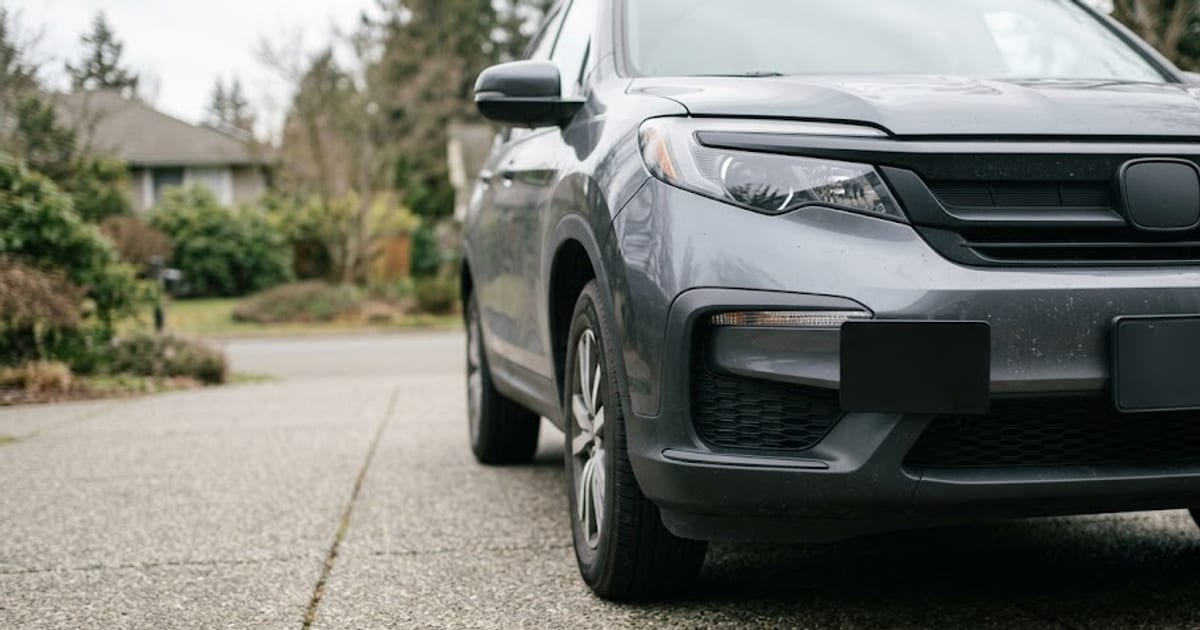
U0405 means a control module received data from the cruise control module that failed a validity check. The generic definition is "Invalid Data Received From Cruise Control Module." On vehicles with adaptive cruise control, the "cruise control module" is usually the radar sensor behind the front grille or bumper, which measures the distance and speed of the vehicle ahead. Several manufacturers, Ford among them, name the radar the cruise control module in their service information.
Severity: low to moderate. Can you keep driving? Yes. Expect a message such as "Adaptive Cruise Unavailable" or "ACC not available," and on many vehicles forward collision warning and automatic emergency braking switch off at the same time because they share the same sensor. The car drives normally, but you have lost driver-assist functions and should not rely on them.
Lost versus invalid
A lost-communication code, such as U0104 for the cruise control module, means messages stopped arriving. An invalid-data code means messages are arriving, but the content does not pass the receiver's checks: a value outside its possible range, a counter that did not increment, a checksum that does not match, or information that contradicts what other sensors report. That distinction is useful. With U0405, the radar is powered and talking. The question is why what it says cannot be trusted.
What the two digits after the dash mean
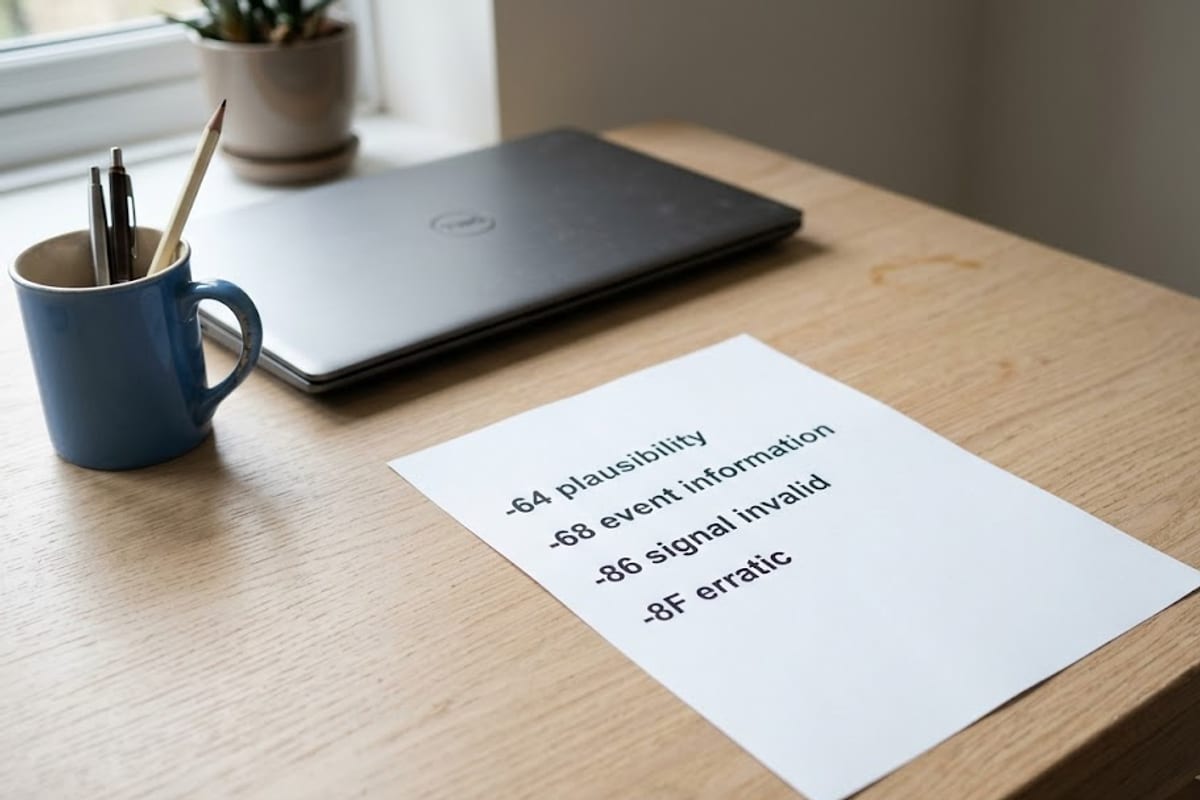
Most modern scan tools show U0405 with a two-character suffix, for example U0405-68. The suffix is a failure type byte, standardised in SAE J2012, and it narrows the fault a great deal. The ones seen most often with U0405 are:
- -00, no sub type information. The module reports the fault without further detail.
- -64, signal plausibility failure. The data is internally valid but does not agree with other information, for example a target speed that does not fit the vehicle's own wheel speed.
- -68, event information. The module is reporting that an event has happened rather than a hard fault. With radar units this is typically a temporary condition such as the sensor being blocked or waiting for calibration.
- -71, actuator stuck. Rarely seen on radar units, more often on older cruise systems with a mechanical actuator.
- -86, signal invalid. The message was flagged as invalid by the sender itself, which on a radar usually means it knows its own output is not usable.
- -8F, erratic. The value changes in ways that do not fit normal operation.
The usual causes
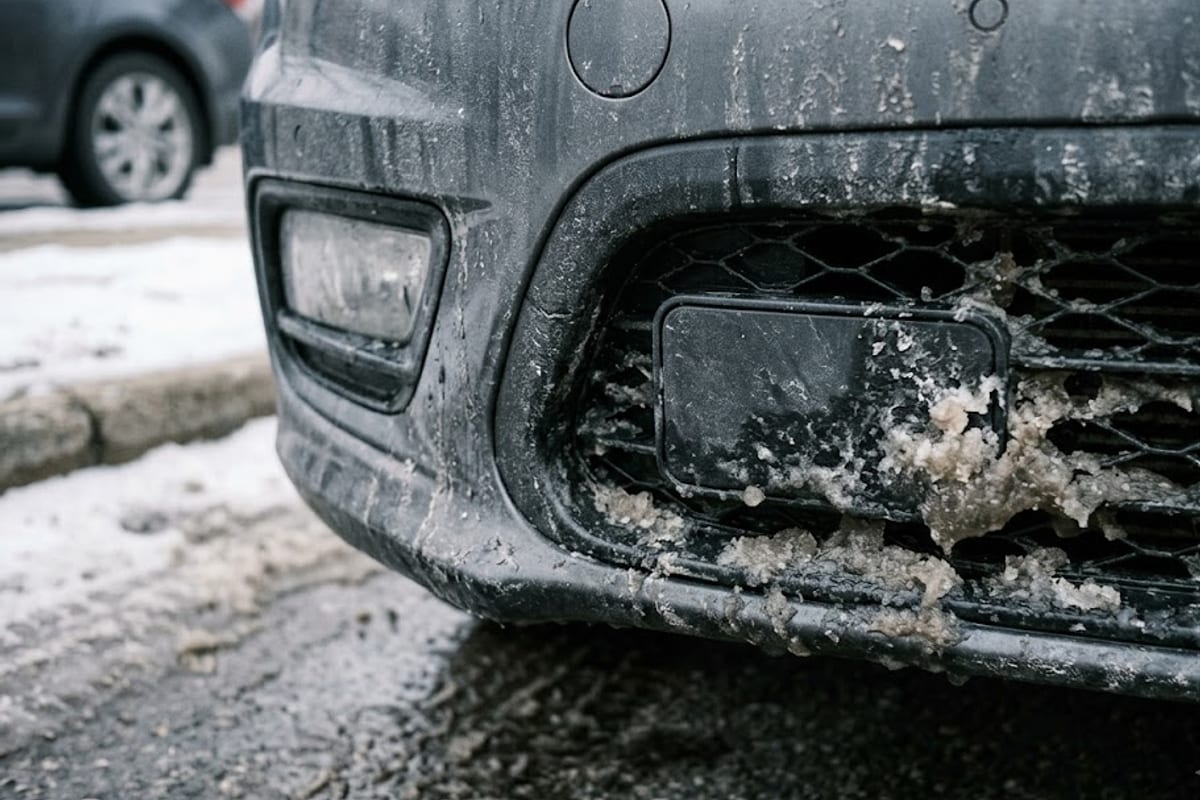
A blocked sensor. Snow, ice, mud, a thick layer of road salt, a bug strike or an aftermarket grille badge or plate frame in front of the sensor all degrade the radar signal. The radar detects the loss of performance and flags its own data, which the receiving module stores as U0405. This is the most common cause and the cheapest: clean the sensor cover with plain water and a soft cloth and drive for a few minutes on an open road.
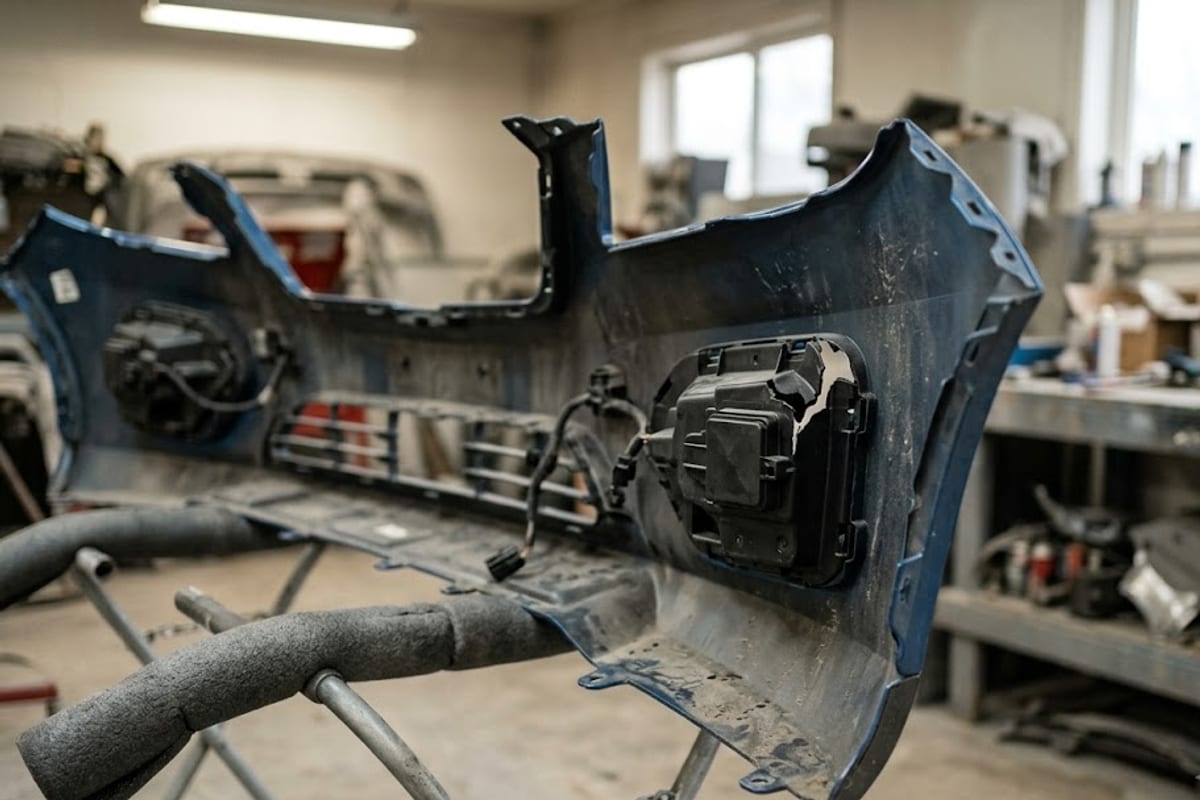
Misalignment. The radar has to point straight down the road within a small tolerance. A minor parking knock, a replaced bumper cover or grille, a cracked mounting bracket or a front-end collision repair done without recalibration will all leave it looking slightly to one side. The radar recognises that its targets are drifting and reports a calibration or plausibility fault.
Missed calibration after a repair. Many radars need a static or dynamic calibration after a bumper, grille or sensor has been removed, and sometimes after a wheel alignment. A car returned from a body shop with a U0405 and an "ACC unavailable" message has often simply not been calibrated.
Software. Manufacturers release radar and module software updates to correct false fault reports. Ask a dealer to check for updates before replacing anything.
Wiring and power. Less common than on older systems, because a radar with a power fault usually stops communicating altogether and sets a lost-communication code instead. Low battery voltage during starting can set a history U0405 across several modules at once.
The radar itself, last.
A diagnostic order
- Read codes from all modules and note the suffix. A U0405-68 alongside a radar code of its own that says "blocked" or "not calibrated" points directly at cleaning or calibration.
- Inspect and clean the sensor cover. Look for anything in front of it: stickers, a new grille insert, a number plate frame, a winter cover.
- Look at the mounting. Check that the sensor is firmly held and the bracket is not cracked, and ask whether the front of the car has been repaired or knocked recently.
- Check for software updates for the radar and for the module that stored the code.
- Perform the calibration procedure from the service information if anything at the front has been disturbed. Some vehicles calibrate by driving at a set speed on a straight, well-marked road; others need a target board in a workshop.
- Only then consider the sensor. Replacements always need calibration and often programming.
Makes and suffixes that turn up
Ford is the brand most associated with U0405 in search, and owner forums for the F-150 and the European Mondeo describe it alongside "adaptive cruise unavailable" messages. Land Rover drivers search for U0405-86, and Opel owners for U0405-71. On any make, the same logic applies: read the suffix, check the sensor's view of the road, then its aim, then its software.
The article on U codes and module communication explains how invalid-data codes differ from lost-communication ones across the network, and what a trouble code does not tell you is worth reading before you replace an expensive sensor on the strength of one code.
Static and dynamic calibration
Radar calibration comes in two forms. Static calibration is done in a workshop with the vehicle on a level floor and a target board placed at a precise distance and height in front of it. The scan tool tells the radar to look at the target and store its own aim. Dynamic calibration is done on the road: the technician starts a routine and drives at a set speed on a straight road with clear lane markings and other traffic, and the radar learns its aim from real targets. Some vehicles need one, some the other, and some need both after major work. A calibration attempted on an unsuitable road, or with the wrong tyre pressures or a heavy load, may fail or produce a result that sets the code again later.
Frequently asked questions
Can I drive with U0405?
Yes. Cruise control and often collision warning and automatic braking are disabled, so drive without them until the fault is fixed.
Why does U0405 come and go in winter?
Snow, ice and salt on the radar cover block its signal. The radar flags its own data as unreliable and the code sets, then clears once the cover is clean again. Cleaning the cover usually restores the system.
Does U0405 mean the radar needs replacing?
Rarely at first. Cleaning, a check of the mounting, software updates and calibration fix most cases. Replace the radar only after those have been ruled out.
Do I need a calibration after replacing a bumper?
On most cars with a front radar, yes. Removing the bumper or grille disturbs the sensor's aim, and without calibration the car will often set U0405 or a radar calibration code within a short drive.
What is the difference between U0405 and U0104?
U0104 means messages from the cruise control module stopped arriving. U0405 means they arrive but cannot be trusted.
Can a new number plate frame cause U0405?
Yes, if the radar sits behind the plate area. Metal frames and some plastic covers reflect or absorb the radar signal.
Sources: SAE J2012 code definitions and failure type byte descriptions.