
P0509 means the engine computer has seen a reading on the idle air control (IAC) circuit that is higher than it should be. The SAE J2012 definition is "Idle Air Control System Circuit High." In practice the computer is saying one of two things: the electrical signal on the valve circuit is out of range on the high side, or it has commanded the idle valve as far as it will go and the engine still is not idling where it asked.
Severity: moderate. Can you keep driving? Yes, carefully. Expect a high idle, a low or hunting idle, or a stall when you come to a stop or switch the air conditioning on. Stalling at a junction is the real risk, so fix it soon if the engine dies at idle.
Why this code is mostly an older-car code
An idle air control valve is a small motorised valve that lets a measured amount of air bypass a closed throttle plate. Engines with a cable-operated throttle need one, because when your foot is off the pedal the throttle plate is shut and the engine would otherwise have no way to hold idle speed while the power steering, alternator and air conditioning put load on it.
Engines with an electronic throttle do not have a separate idle valve. The computer holds idle by opening the throttle plate itself by a fraction of a degree. On those engines the idle-circuit codes are replaced by throttle actuator codes, and a manufacturer that still reports P0509 on an electronic-throttle vehicle is using it for its own definition, which you need to read in its service information.
That is why P0509 appears most often on vehicles from roughly the late 1990s to the late 2000s: Hyundai and Kia four-cylinders with a rotary idle speed actuator, Chrysler and Dodge engines with a four-wire stepper valve, Mitsubishi and Subaru engines of the same period, and older GM trucks. Some manufacturers phrase it slightly differently. Chrysler and Mitsubishi lists call it "Idle Air Control Valve Sense Circuit High", which points to the same fault from the other direction.
Two kinds of idle valve, two ways to read "high"
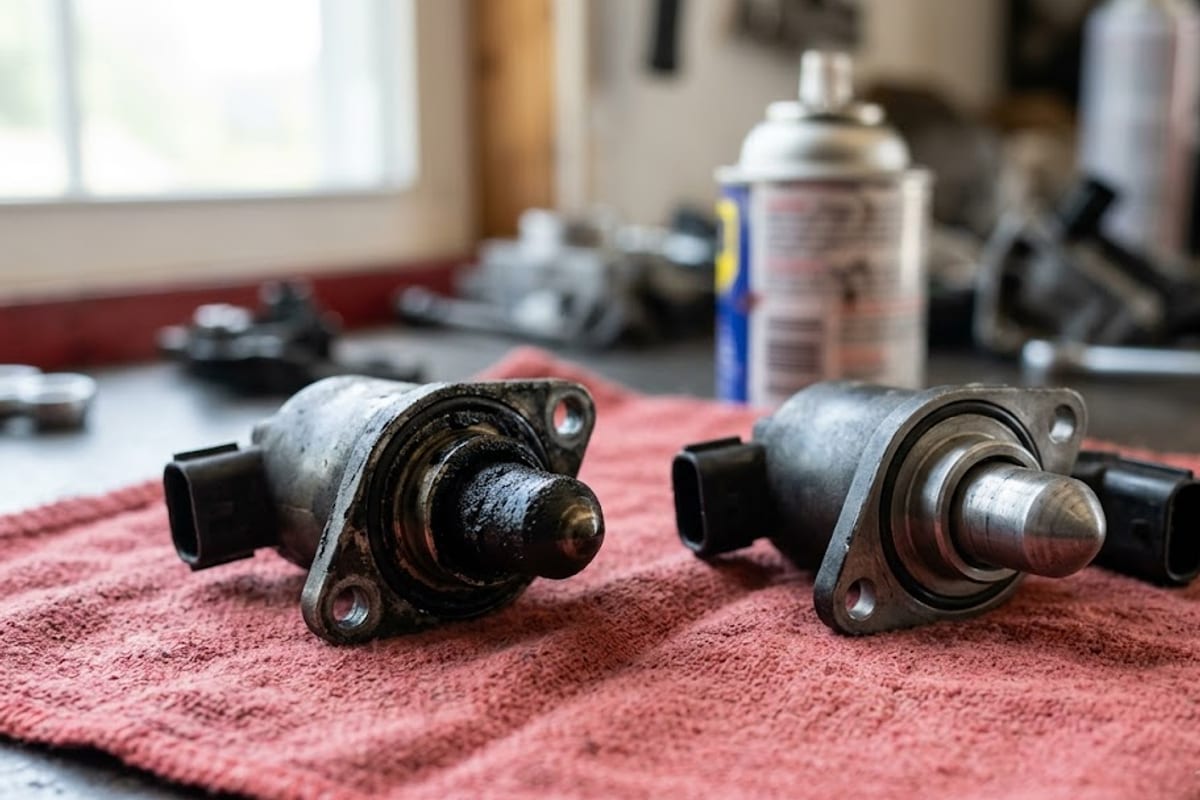
Stepper motor valves (common on GM and Chrysler) move a tapered pintle in and out of an air passage in small counted steps. The computer does not measure where the pintle is; it counts the steps it has sent. "Circuit high" on these usually means the computer has driven the valve toward full open and the engine still idles below target, or that one of the motor windings reads open, which the driver circuit sees as a high voltage.
Rotary or duty-cycle valves (common on Hyundai, Kia and many Japanese engines) use one or two coils and a rotating shutter. The computer controls the opening by changing the duty cycle, the share of each pulse that the coil is energised. "Circuit high" here usually means the voltage on the driver side stays high when it should be pulled low, which is what an open coil, an open wire or a disconnected plug looks like to the computer.
The distinction matters because it changes where you look. A stepper valve that cannot hold idle often has nothing electrically wrong with it: the air passage is choked with carbon and even full open is not enough air. A rotary valve that sets a circuit-high code is more likely to have an electrical fault.
The order to test in
The cheapest mistakes with P0509 are buying an idle valve that was never faulty and cleaning a throttle body on an engine whose real problem is a broken wire. This order avoids both.
- Read the freeze frame. Note engine temperature, rpm and whether the code set at idle with the air conditioning on. A code that only sets on a cold start with a high idle points to a different problem than one that sets hot at a stop. The freeze frame guide explains what each field means.
- Look for other codes first. A vacuum leak, a lean code such as P0171 or an idle-speed code such as P0508 changes the picture. If the engine is sucking unmetered air through a split hose, the idle valve will be driven fully closed, not open, and the code that follows is a low-side code rather than P0509.
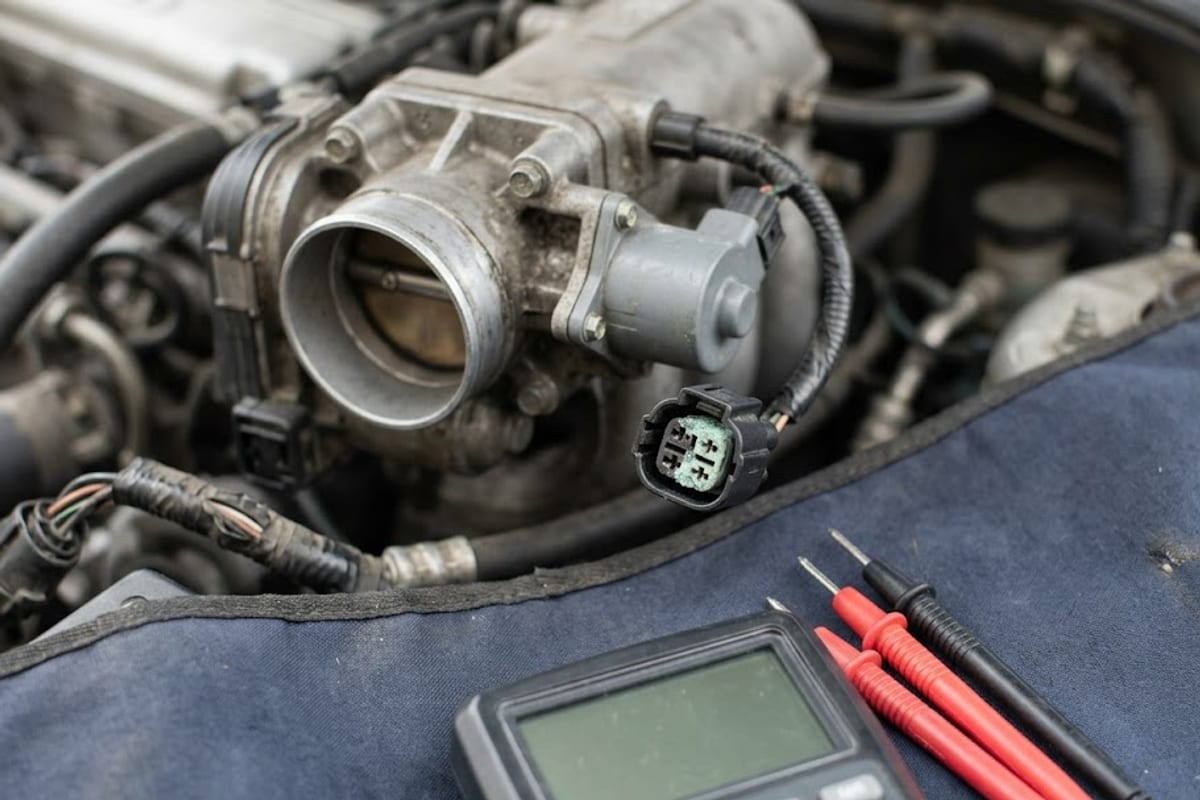
- Inspect the connector and the wiring at the valve. Unplug it, look for green corrosion, pushed-back pins and broken insulation, and plug it back in firmly. Water that runs down the windscreen cowl onto the throttle body is a classic cause on some front-drive cars.
- Measure the valve's coil resistance at the valve terminals with the plug off and compare with the value in the service manual. An open coil (no reading) confirms a failed valve. A reading inside the specification means the valve's windings are fine and the problem is elsewhere.
- Check the wiring back to the computer. With the valve unplugged and the computer disconnected, check each wire end to end for continuity and for a short to power. A wire shorted to a 12-volt feed produces exactly the "circuit high" condition the code describes.
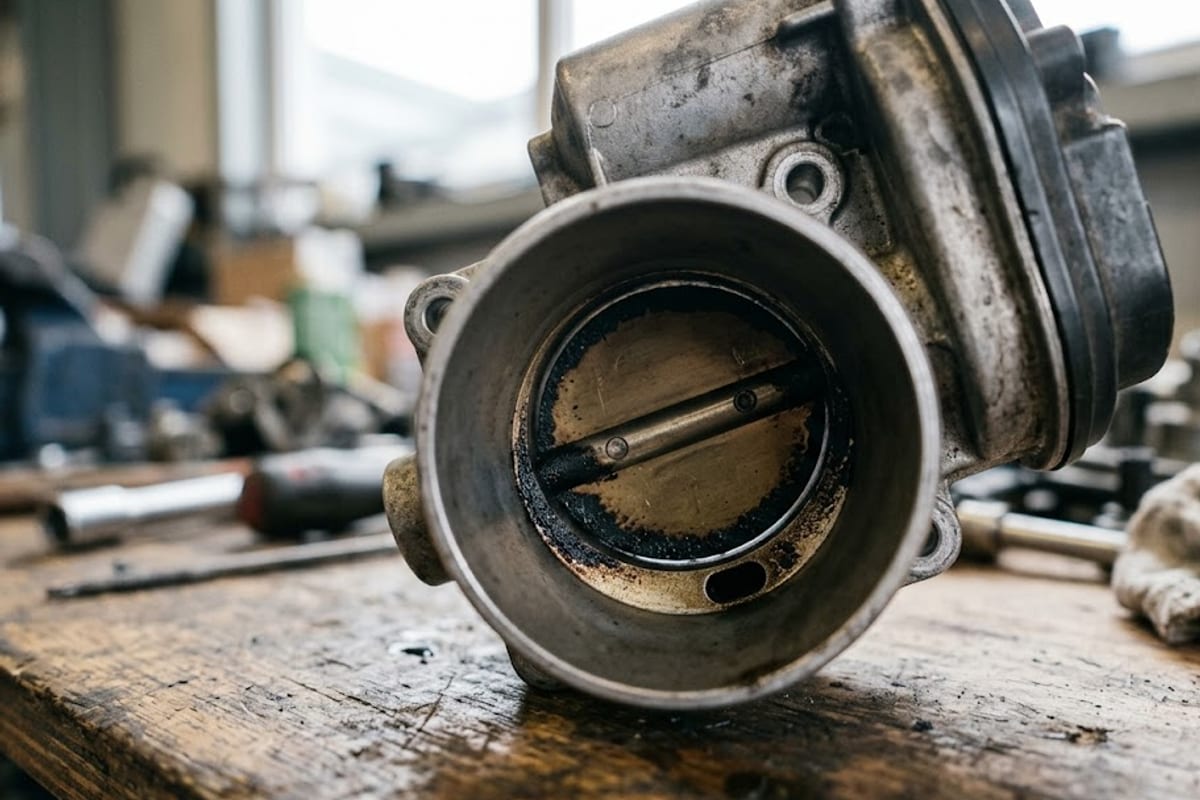
- Clean the throttle bore and the idle air passage. If the electrical checks pass, remove the idle valve, clean its pintle or shutter and the bypass port with throttle body cleaner, and clean the throttle plate edge. Carbon builds up fastest on engines with oily crankcase ventilation, and a choked bypass passage is the most common cause of the "commanded fully open, idle still low" version of this code.
- Relearn idle. Many engines need an idle relearn after cleaning or after the battery has been disconnected. Some relearn by idling for a set time with accessories off; others need a scan tool command. Skipping this step makes a correct repair look like it failed.
- Replace the valve last, and only if the coil is open, the valve is mechanically stuck, or cleaning and a relearn did not bring idle back into range.
What the code does not tell you
P0509 names the circuit, not the part. A new idle valve fitted to a connector with a corroded terminal will set the same code on the first drive. The same is true of the computer: an engine computer that drives the valve is rarely the fault, and replacing one should come only after the wiring and the valve have both been proven good. The general version of this point is covered in what a trouble code does not tell you.
It also does not tell you whether the idle problem is caused by the valve or merely noticed by it. A throttle cable adjusted too tight, holding the throttle plate slightly open, gives the engine extra air the idle valve cannot remove; on some engines the computer then drives the valve hard in one direction and sets an idle-control code. Check that the throttle plate closes fully and that the cable has a little free play before blaming anything electrical.
Common causes, most likely first
- Carbon in the throttle bore and idle bypass passage, most often on higher-mileage engines with a tired PCV system.
- A corroded or loose connector at the idle valve, especially where water can reach the top of the throttle body.
- An open coil or winding inside the valve.
- A damaged wire between the valve and the engine computer, including a chafe that shorts it to a power feed.
- A missed idle relearn after battery disconnection, throttle body cleaning or valve replacement.
- The engine computer, rarely, after everything above has been ruled out.
After the repair
Clear the code and let the engine idle through a full warm-up with the air conditioning off, then on. A good repair holds a steady idle in both conditions and returns to target quickly after you blip the throttle. The code clearing process and why the readiness monitors reset with it are explained in clearing codes and readiness monitors. If the light returns within a few days, go back to the wiring checks in step 5: an intermittent short is the fault most often missed the first time round.
Frequently asked questions
Can I drive with P0509?
Usually, yes. The engine runs, but idle may be unstable. If it stalls when you stop or when the air conditioning cycles on, get it fixed before relying on the vehicle in traffic.
Will cleaning the throttle body fix P0509?
On stepper-valve engines with carbon in the bypass passage, often yes, as long as you also clean the valve pintle and perform the idle relearn. On engines where the code comes from an open coil or a broken wire, cleaning will not change anything.
What does "circuit high" mean?
That the computer saw a value above the expected range on that circuit. Depending on the design, it can mean a higher voltage than expected on the valve driver, or that the computer has commanded the valve to its high limit without reaching the target idle.
Does my car even have an idle air control valve?
If the throttle is opened by a cable from the pedal, it almost certainly does. If the accelerator pedal has only a wiring connector and no cable, idle is controlled by the electronic throttle and the manufacturer's own definition of P0509 applies.
What codes often appear with P0509?
Other idle-control codes (P0505 to P0508), lean codes from vacuum leaks, and throttle position codes. Diagnose any vacuum leak or throttle position fault first, because either can drive the idle valve to its limit.
Sources: SAE J2012 diagnostic trouble code definitions; manufacturer code lists for Chrysler and Mitsubishi ("Idle Air Control Valve Sense Circuit High").