U0100 — lost communication with the engine control module. The wording invites the conclusion that the engine module has failed. It usually has not.
U-codes are network codes. They say one module expected a message from another and did not get it. What broke is far more often the path than either endpoint.
How the network works
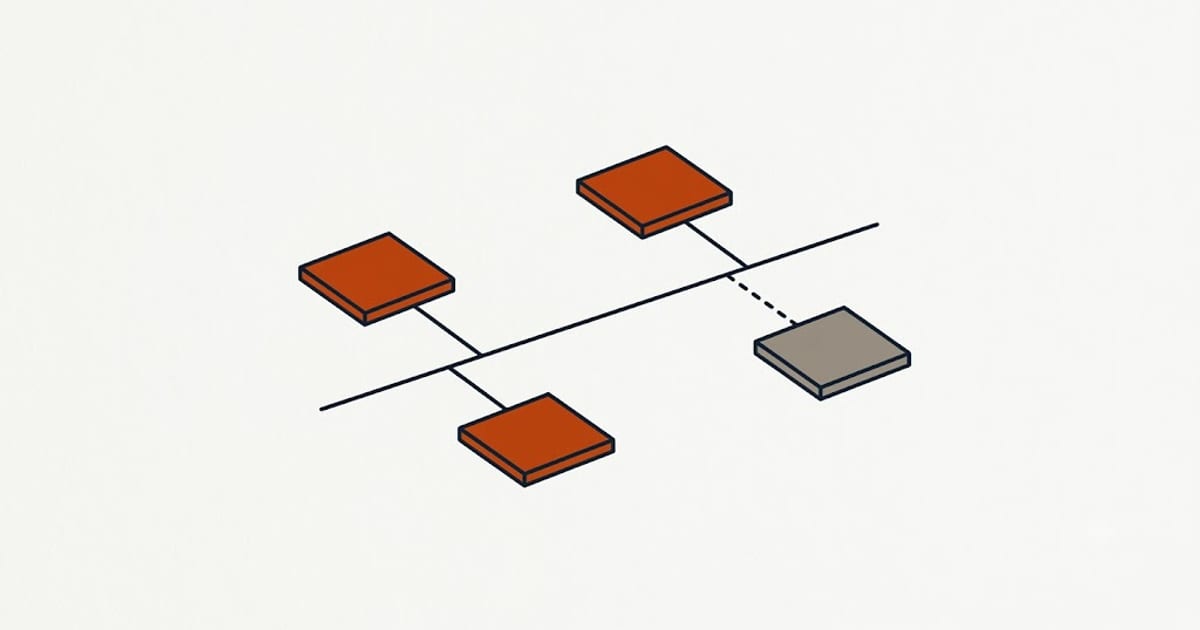
Modern vehicles run a shared communication bus, usually CAN. Every module — engine, transmission, ABS, body, instrument cluster — sits on the same pair of twisted wires and broadcasts messages the others read.
Each module also knows which messages it should be seeing. When an expected message stops arriving for long enough, it stores a U-code naming the module it lost.
So U0100 stored in the transmission module means the transmission module stopped hearing the engine module. It is a report by the listener about the speaker, and it does not distinguish between a silent speaker, a cut wire, and a listener that itself lost power.
Where to look, in order
Power and ground first. A module with no power says nothing, and every other module reports it missing. Check the fuses for the named module before anything else — this alone accounts for a large share of U-codes and costs nothing to rule out.
Then the ground points. A corroded chassis ground affects everything sharing it, and produces symptoms that look random and unrelated. Ground faults are the classic cause of a car that sets a dozen codes across five systems at once.
Then the bus wiring. The two CAN wires are twisted for noise immunity, and a chafe to bare metal, a rodent bite, or water in a connector interrupts the pair. Look where the loom passes through a bulkhead, near anything hot, and anywhere a previous repair or accessory was fitted.
Then recent work. An aftermarket alarm, a stereo, a trailer harness, a tow bar, or any repair involving the loom is a prime suspect. Bus faults appearing days after work was done are usually connected to that work.
The module itself, last. Modules do fail, but they are the most expensive item on the list and often need programming to the vehicle. Everything above it is cheaper and more likely.
Why one fault sets many codes
The network is shared, so a single interruption is visible to everyone.
A module that drops off the bus is reported missing by every other module that expected to hear from it. Pull the codes and you may find five or six U-codes in different modules, all describing the same silence from different vantage points.
The useful move is to find the one module named by everyone else — that is the one that went quiet — and start at its power, ground and connector. Chasing each code separately means diagnosing one fault five times.
Codes that stored during a flat battery
A battery low enough to crank slowly drops the supply below what modules need to stay alive. They drop off the bus one by one, each recording that the others vanished.
The result is a vehicle full of U-codes after a jump start, none of which describe a real fault. Charge the battery properly, clear the codes, and see which return. Usually none do.
This is also why a set of U-codes after a battery replacement, a long period standing, or a slow crank should not be chased before the battery and charging system have been tested.
What they feel like from the driver's seat
Symptoms are wide-ranging because a module cut off from the network loses the information it needs to work properly: a transmission that will not shift out of a default gear, stability control and ABS lights on together, a speedometer or fuel gauge reading nothing, a car that cranks but will not start because the immobiliser cannot confirm the key.
The pattern of what stopped working points at which module went quiet, and that is often faster than reading the codes.
The one thing not to do
Do not replace a module because a U-code names it. The code was stored by something else, about that module, and a wiring or supply fault produces the identical code.
Confirm the module has power and ground at its connector first. If it does, and the bus wiring is intact, only then is the module itself a reasonable suspect.