P0576 means the engine control module saw the cruise control input circuit at a lower voltage than any button press should produce, for longer than a button press should last. The engine does not care; power, fuel economy and emissions are unaffected. Cruise control stops working, the check engine light comes on, and the fix is almost always in the switch or the wiring between the steering wheel and the computer.
Severity: low. Can you keep driving? Yes. The code affects only the cruise control input; engine power, emissions and safety systems are unaffected. Fix it for convenience and to turn off the check engine light before an inspection.
How the cruise switch circuit works
A steering-wheel cruise control cluster has four or five buttons (on/off, set, resume, cancel, sometimes plus and minus), but on most vehicles built after about 2000 it uses a single signal wire. The module feeds that wire with a reference voltage, usually 5 V, through a resistor. Each button connects a different resistor to ground. The module reads the resulting voltage and knows which button is pressed from the value:
- Nothing pressed: the wire sits near the reference voltage.
- On/off: one voltage, say 4.0 V.
- Set: another, say 2.5 V.
- Resume: another, say 1.5 V.
- Cancel: the lowest, often near 0.5 V.
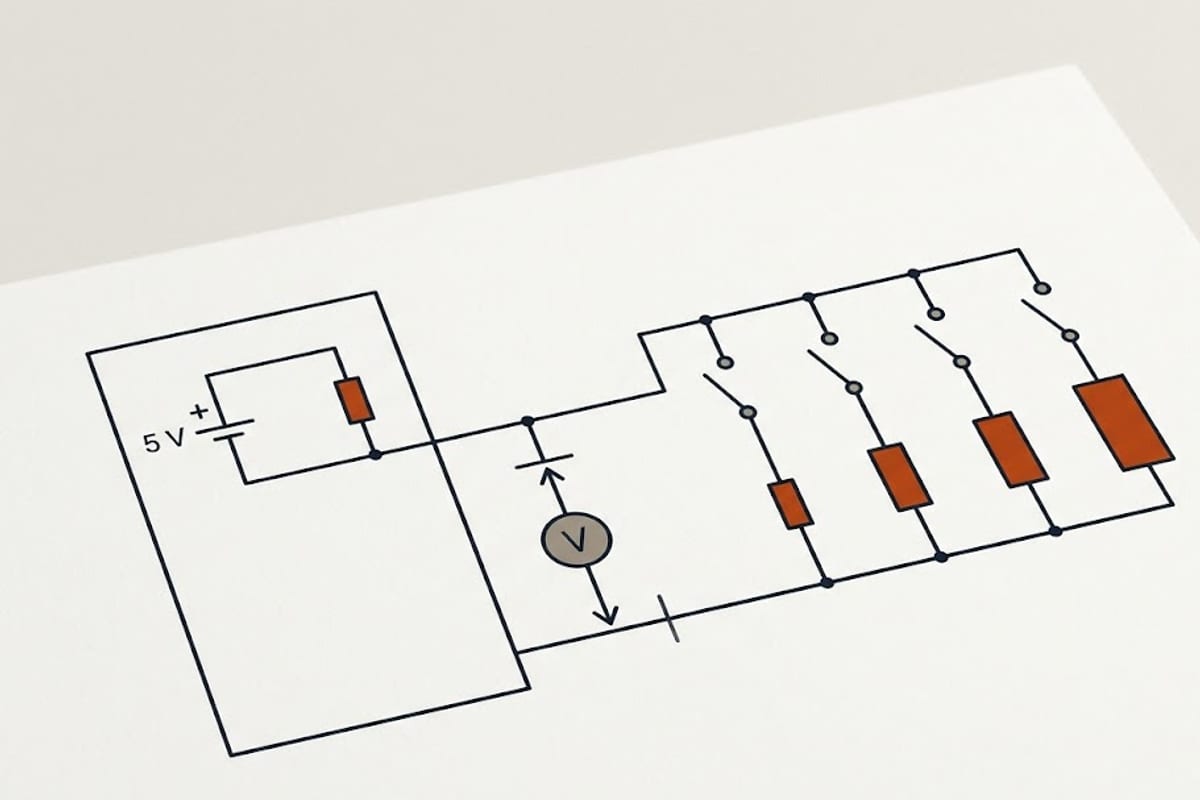
The exact values vary by manufacturer. The principle does not. The module also knows how long a real button press lasts. A voltage below the lowest legitimate value, or a legitimate value held for many seconds, means the circuit is shorted to ground or a button is stuck. That is P0576. Its partner P0577, input circuit high, is the wire open or the ground missing, so the module reads reference voltage with no button ever registering.
Causes, in the order they turn up
A liquid spill in the switch. Coffee, soda or water through the gaps around the buttons leaves a conductive film across the contacts. The circuit reads a low resistance path that no button explains. Sticky buttons and a switch that feels different are the tells.
A button stuck down. Wear, a cracked button or debris behind it holds one contact closed. The module sees a valid voltage that never releases and flags it as low. Pressing every button firmly a few times sometimes clears it, which is a clue rather than a fix.
The clockspring. The switches sit on the steering wheel, which turns. The wiring between the wheel and the column passes through a coiled flat ribbon inside the clockspring (also called the spiral cable or the airbag contact reel). A worn clockspring produces intermittent opens and shorts, and because the airbag and horn share it, the cruise fault often arrives with a horn that works only in some wheel positions or an airbag warning. If any of those are present together, the clockspring is the answer and the cruise switch is fine.
Chafed or pinched wiring in the column. Wiring near the ignition switch and the column tilt mechanism wears through where it flexes. A short to ground on the signal wire sets P0576 solid.
A fuse or a shared ground. Less common, because a blown fuse usually produces the high code, not the low one. Check it anyway, it takes a minute.
The engine control module. Rare, and last, only after the switch and wiring test good with the module still reading low.
Vehicles where this code is common
The single-wire resistor ladder is universal enough that P0576 appears across makes. It is reported often on Hyundai and Kia, Nissan and Infiniti, Chrysler, Dodge and Jeep, and Toyota vehicles with steering-wheel cruise buttons, and on many of those a replacement switch is a low-cost part. The FS1 diagnostic guide lists the switch replacement as the most common repair, with the clockspring second.
Test the switch with a multimeter
The switch is a resistor ladder, so it can be tested in a few minutes without a scan tool.
- Disconnect the battery negative and wait ten minutes before touching anything near the airbag. The switch connector is behind the airbag on many wheels; on others it is accessible from the back of the wheel spokes.
- Unplug the switch and set the meter to ohms across its two signal pins (some switches use a third pin for illumination; ignore it).
- Read with nothing pressed. Expect a high resistance or open. A low reading with no button pressed is the spill or the stuck contact, and the switch is done.
- Press each button in turn. Each should give a distinct, steady resistance, typically a few hundred ohms to a few thousand, in descending order. A button that gives a jumpy reading or the same value as another is worn.
- Release each button and confirm the reading returns to open. A button that stays low is the stuck one.
If the switch passes, the fault is downstream.
Test the wiring and the clockspring
- Back-probe the signal wire at the switch connector, key on, switch unplugged. Expect the reference voltage, near 5 V on most vehicles. Near zero means the wire is shorted to ground somewhere between here and the module, or the module is not feeding it.
- Turn the steering wheel slowly lock to lock while watching the voltage. A reading that drops or flickers at certain wheel angles is the clockspring.
- With the key off and both ends unplugged, check the signal wire for continuity to the module connector and for resistance to ground. Continuity should be near zero ohms, resistance to ground should be infinite.
- Wiggle the column harness where it passes the tilt mechanism and the ignition switch with the meter still connected.
The freeze frame helps here too: a code that set at a particular vehicle speed or on a turn points at the clockspring or a chafe point that opens under movement.
After the repair
Clear the code, cycle the key and test every button on the road. On some vehicles the cruise system needs the vehicle above a minimum speed to engage, so a test at a standstill proves nothing. The readiness monitors are not affected by this code, so there is no drive-cycle requirement for inspection purposes beyond the clear.
What the code does not tell you
P0576 does not say which button, which wire or which component. It says the voltage on one wire was too low for too long. The resistor-ladder test above is what turns that into a part name. The distinction between the circuit and the part is the point of what a trouble code does not tell you.
Frequently asked questions
Can I drive with a P0576 code?
Yes. P0576 only reports a low voltage on the cruise control switch input. The engine, transmission, brakes and airbags are not involved. Cruise control will not engage until the fault is repaired, and the check engine light stays on.
What is the most common cause of P0576?
A faulty cruise control switch on the steering wheel, most often after a liquid spill leaves a conductive film across the contacts or a button sticks down. The clockspring behind the steering wheel is the second most common cause, and it usually comes with a horn that works only in some wheel positions.
How do I test the cruise control switch?
Disconnect the battery and wait ten minutes before working near the airbag. Unplug the switch and measure resistance across its signal pins: open with nothing pressed, and a distinct steady resistance for each button. A low reading with nothing pressed, or a button that stays low after release, condemns the switch.
What is the difference between P0576 and P0577?
P0576 is input circuit low: the signal wire is shorted to ground or a button is held. P0577 is input circuit high: the wire is open or the ground is missing, so the computer reads the reference voltage and no button ever registers.
Related codes
- P0577: Cruise control input circuit high. The wire open, or the ground missing.
- P0564: Cruise control multi-function input A circuit. The generic switch-circuit code some manufacturers use instead.
- P0565 to P0572: Individual cruise switch codes (on, off, resume, set, coast, accel) used by manufacturers that wire buttons separately.
- P0575: Cruise control input circuit, the range/performance version.
- P0574: Cruise control system, vehicle speed too high. A different fault entirely: the vehicle exceeded the cruise cutoff speed, usually from a speed sensor fault.
Code structure and what each character means: how to read an OBD2 code number.