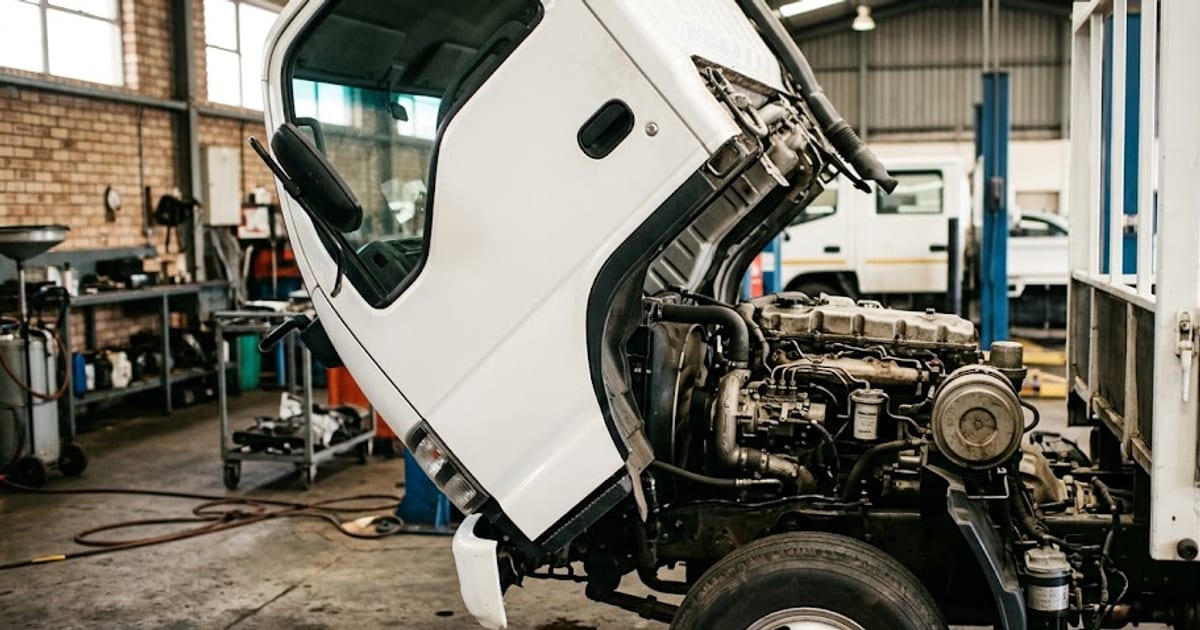
P053E means the engine computer has measured pressure inside the crankcase that is higher than its limit. The generic definition is "Crankcase Pressure Too High." The crankcase is the space below the pistons where the oil lives. Some gas always leaks past the piston rings into it, called blow-by, and the crankcase ventilation system carries that gas away. P053E means gas is building up faster than it is leaving.
Severity: moderate. Can you keep driving? For a short time, and check the oil first. High crankcase pressure pushes oil out through seals and gaskets, can force oil into the intake and the turbocharger, and on some engines the computer reduces power to protect the engine. If you see heavy oil leaks, blue smoke or a sudden drop in oil level, stop and investigate before driving further.
Where you see P053E
P053E is most often searched by owners and fleet technicians of Mitsubishi Fuso Canter light-duty trucks with the 4P10 diesel engine, which monitors crankcase pressure with a dedicated sensor. It also appears on other modern diesels and on some turbocharged petrol engines that use a crankcase pressure sensor to check the ventilation system. It is easy to confuse with P052E, which Mercedes-Benz owners search for often. P052E is a ventilation valve performance code, while P053E is a direct measurement of pressure. The P052E page covers the valve side.
Two ways to get high pressure
It helps to think of the crankcase as a room with gas coming in and gas going out.
More gas coming in. Worn piston rings, glazed cylinder walls, a leaking turbocharger oil seal that lets boost into the oil return, or on some diesels a leaking vacuum pump or air compressor all add gas to the crankcase. This is real engine wear, and it is the expensive answer.
Less gas going out. A clogged breather filter, a blocked ventilation hose, a frozen or kinked vent line in winter, a stuck ventilation valve, or an oil level so high that the vent path is flooded all trap normal blow-by in the crankcase. This is the common answer, and the cheap one.
P053E cannot tell the two apart. Your job is to prove the outlet side is clear before concluding the engine is worn.
Checks in order of cost
- Check the oil level. An overfilled engine, or one whose oil level is rising because fuel or coolant is getting into it, can flood the ventilation outlet. Check the level on flat ground with the engine off and settled. If the level is rising between changes, find out why before anything else.
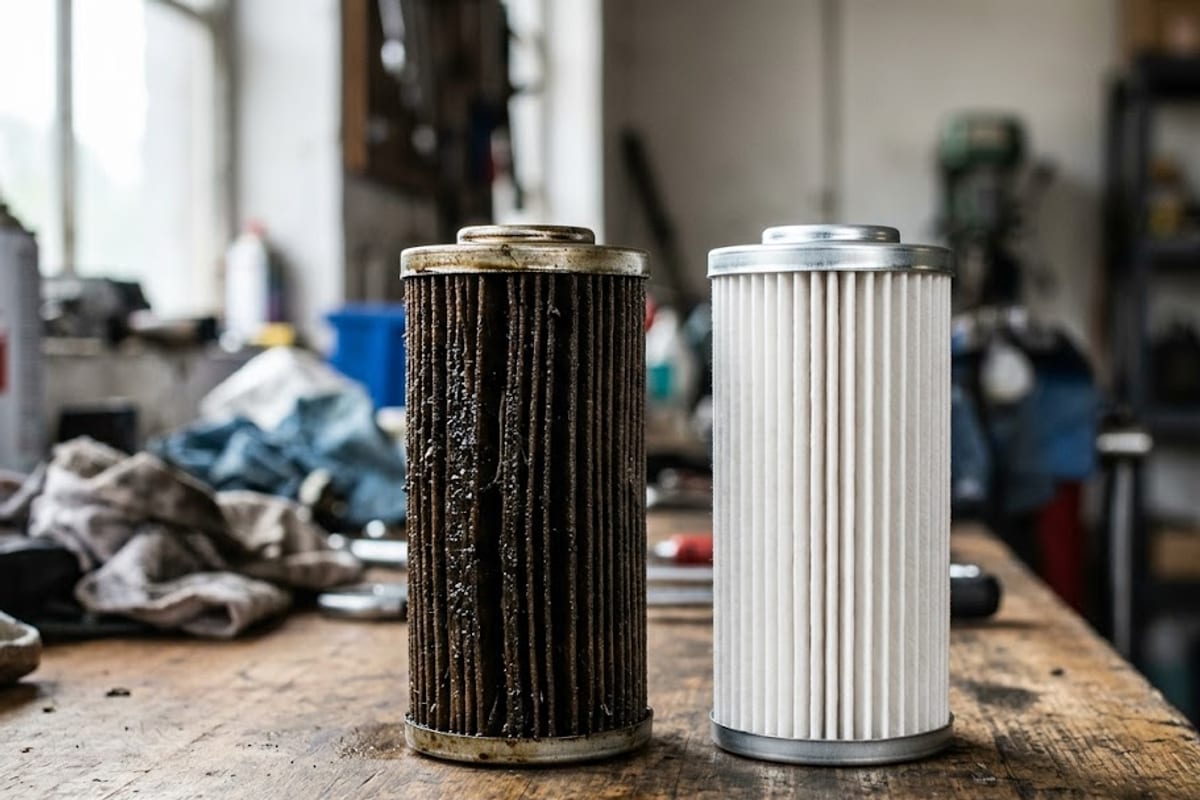
- Inspect the breather filter. Many diesels, the Fuso 4P10 included, have a replaceable crankcase breather or ventilation filter. It is a service item that is easy to forget, and a filter saturated with oil sludge after long service intervals is the most common single finding on trucks with P053E.
- Inspect every ventilation hose from the valve cover to where it rejoins the intake or vents to the atmosphere. Look for kinks, collapsed sections, oil sludge plugs and, in cold climates, ice where moisture has frozen in a low point.
- Check the oil filler cap and dipstick seals. Some systems measure pressure against a sealed crankcase; a missing cap seal or a loose dipstick tube can confuse the reading in either direction.
- Check the sensor and its wiring. A sensor reading high because of a wiring fault sets the same code as a genuinely high pressure. Compare the sensor reading with the engine off, when crankcase pressure should be close to atmospheric.
- Check for software updates. Fuso technicians report that calibration updates have been released to adjust how sensitive this monitor is. A dealer can confirm whether the truck has the latest software.
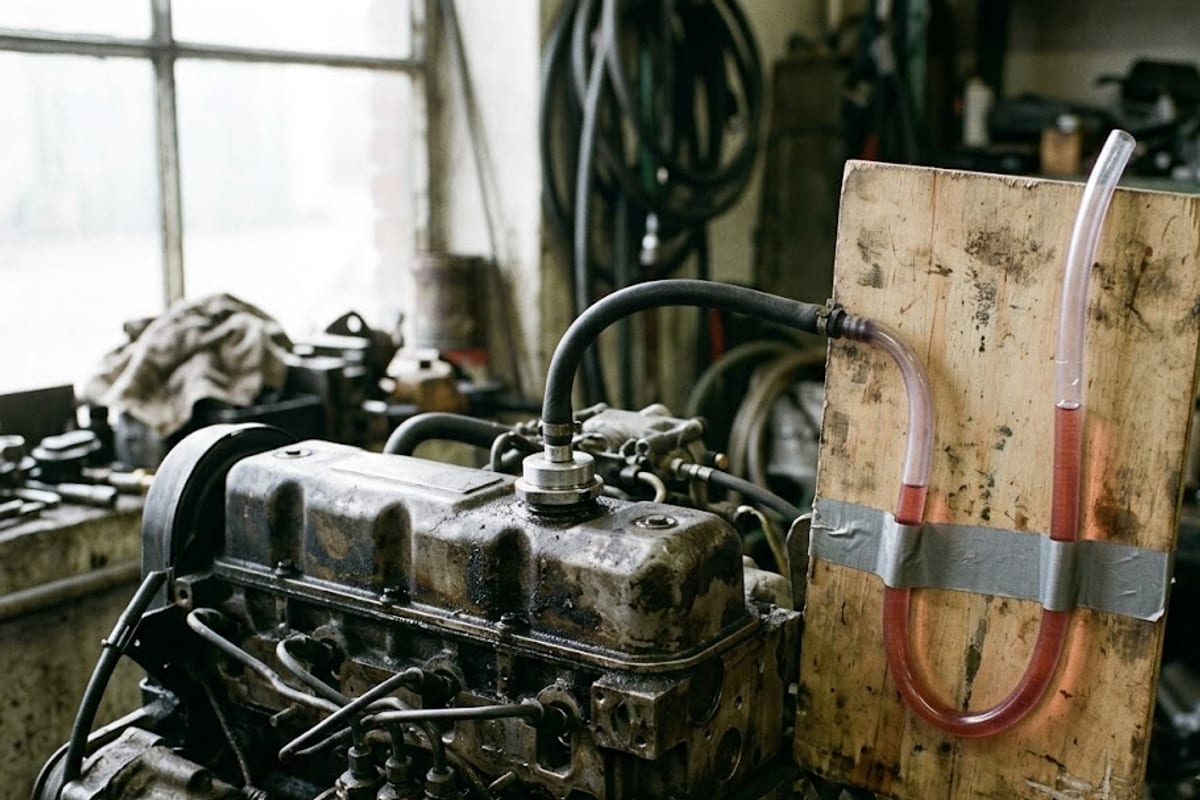
- Measure crankcase pressure directly. With the ventilation path known to be clear, a manometer on the oil filler or dipstick tube shows real crankcase pressure at idle and under load. Compare it with the manufacturer's limit. High pressure with a clear vent points to blow-by or a turbocharger or accessory leak.
- Test the engine last. A cylinder leak-down test or compression test identifies worn rings or a damaged piston. A turbocharger oil seal leak shows as oil in the intake piping and blue smoke under boost.
Mistakes to avoid
Clearing the code and ignoring it. The sensor usually has a point. A clogged filter left in place keeps pushing oil through seals, and the leaks that follow cost more than the filter.
Replacing the sensor first. Unless the sensor reading is clearly wrong with the engine off, a new sensor on a truck with a blocked vent will set the same code again.
Assuming a worn engine too early. High-mileage trucks do have more blow-by, but a filter change and a hose clean are cheap enough to try before a leak-down test, and they fix most cases.

Related codes
On engines with a ventilation valve, P052E points at the valve's performance. Oil getting into the intake from high crankcase pressure can also lead to lean or misfire codes on petrol engines. The general guide to what a trouble code does not tell you explains why a pressure code describes a symptom and not a cause, which is exactly the situation with P053E.
How the sensor sees the crankcase
A crankcase pressure sensor measures the pressure inside the engine relative to the outside air. On an engine whose ventilation system draws blow-by back into the intake, the crankcase normally sits at a slight vacuum while running. On an engine that vents to the atmosphere through a filter, it normally sits very close to outside pressure. In both cases the numbers are small, far smaller than oil pressure or boost pressure, so a modest restriction in the outlet is enough to push the reading over the limit.
That sensitivity is useful for diagnosis. Watch the sensor's live reading on a scan tool while an assistant briefly lifts the oil filler cap. On a healthy system the reading jumps towards atmospheric and settles back when the cap is replaced. If the reading does not move at all, suspect the sensor or its hose rather than the engine.
Winter and short trips
Trucks used for short delivery runs in cold weather rarely get hot enough to drive moisture out of the oil. Water vapour in the blow-by condenses in cold ventilation hoses and can freeze at a low point, closing the outlet completely overnight. A P053E that appears only on cold mornings and disappears once the engine warms up points strongly to ice in a vent line. Rerouting or insulating the hose, as some manufacturers do with cold-climate kits, fixes the cause.
Frequently asked questions
Can I drive with P053E?
For a short time. Check the oil level and look for leaks or smoke. High crankcase pressure can push oil past seals and into the intake, and some engines reduce power to protect themselves.
What is the most common cause of P053E?
On trucks like the Mitsubishi Fuso Canter, a clogged crankcase breather filter after long service intervals. Hoses blocked with sludge or ice come next.
Does P053E mean my engine is worn out?
Not necessarily. High pressure can come from blocked ventilation as easily as from worn rings. Clear the ventilation path first, then measure crankcase pressure before deciding.
Is P053E the same as P052E?
No. P052E is a ventilation valve performance code. P053E is a direct measurement of high crankcase pressure.
Will a software update fix P053E?
Sometimes. Manufacturers have released calibration updates that change how this monitor judges pressure. Check for updates, but still inspect the filter and hoses.
Sources: SAE J2012 code definitions; technician reports on Mitsubishi Fuso Canter trucks with the 4P10 engine.