P0455 is a large evaporative emission leak. P0442 is a small one. P0457 on many vehicles is specifically "leak detected — fuel cap loose or off".
They sit within a few numbers of each other, and one of them is regularly a cap that was not turned until it clicked.
What the system is for
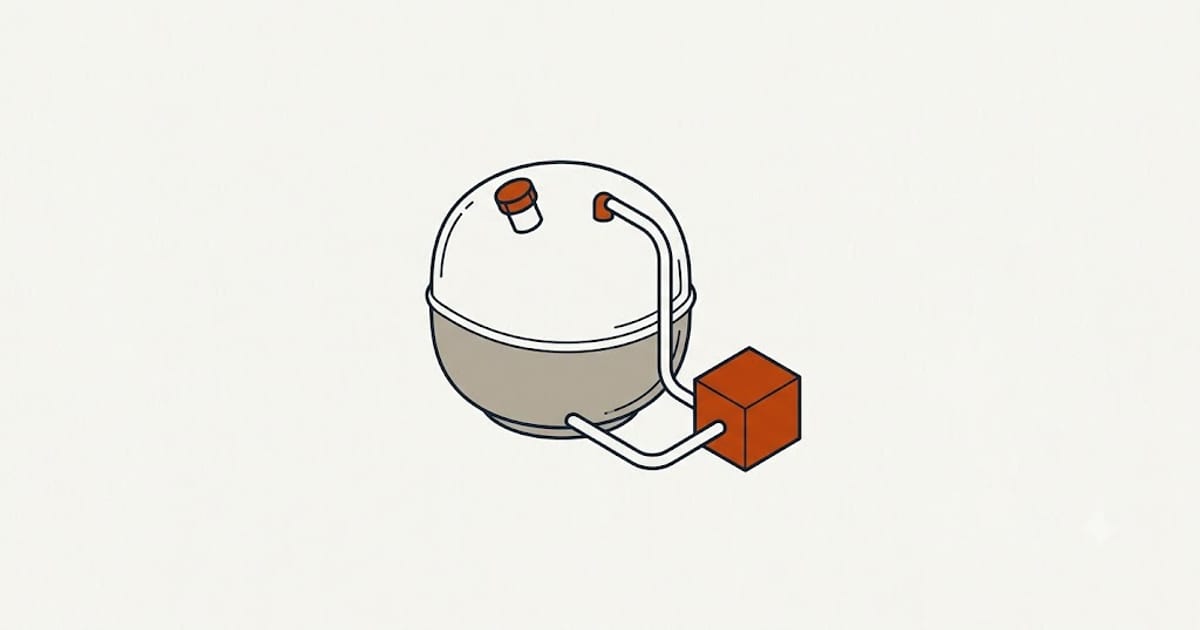
Petrol evaporates. The evaporative emission control system exists to stop those vapours reaching the atmosphere: it seals the tank, routes the vapour into a charcoal canister, and later draws it into the engine to be burnt.
For that to work the whole system has to hold pressure or vacuum. So the module periodically seals it and tests it, either by pulling a vacuum and watching whether it holds, or by pressurising it slightly with a small pump.
A leak means vapour is escaping. It has no effect on how the engine runs, which is why an evaporative code almost never comes with a driveability complaint — just a lamp.
Why the test hardly ever runs
The evaporative monitor is the fussiest of them all. It typically needs:
- fuel level between roughly a quarter and three quarters — too full and there is no vapour space to test, too empty and the readings are unreliable
- a cold start, with engine and ambient temperature within a fairly narrow band
- a period of steady driving afterwards
- no large temperature swing during the test, since heating the tank changes the pressure by itself
Two practical consequences. The code often appears days after whatever caused it. And after clearing it, the monitor can take a week of ordinary driving to run again — which is why evaporative monitors are the usual culprit when a car is "not ready" for an emissions test.
Large, small, and very small
The names describe the size of the hole the module inferred, not how serious it is:
- P0455 — large leak. A cap left off or not clicked, a cap seal that has hardened, a disconnected or split hose, a cracked filler neck.
- P0442 — small leak. A perished cap seal, a hairline crack in a hose, a canister or valve that does not seal fully.
- P0456 — very small leak. Genuinely hard to find without a smoke test.
A large-leak code has a short list and one very cheap item at the top of it. A very-small-leak code usually needs equipment.
Start with the cap
Remove it and look at the rubber seal. If it is hard, cracked, flattened or missing, that is the whole story. Refit it and turn until it clicks, at least three clicks on most designs — the ratchet exists precisely because people under-tighten them.
Then clear the code and drive normally for several days, including cold starts. If the monitor runs and the code does not return, it was the cap.
Note that on many vehicles a loose cap sets its own specific code and even a dashboard message, so a generic P0455 with a cap that seals properly points elsewhere.
The rest of the list
- Purge valve stuck open. This one can affect running — it lets vapour into the intake when it should not, producing a rough idle and sometimes a lean code alongside.
- Vent valve stuck closed, which also makes the tank hard to fill because vapour cannot escape as fuel goes in.
- The charcoal canister itself, cracked or saturated. Repeatedly topping the tank up after the pump clicks off floods the canister with liquid fuel and is a known way to kill it.
- Hoses and the filler neck, particularly where they run near heat or where the underside has corroded.
Why nobody finds a small leak by looking
A very small leak is, by definition, a hole too small to see. The tool is a smoke machine: low-pressure smoke into the system, then look for where it seeps out. It takes minutes and finds what an afternoon of visual inspection does not.
Before paying for that, it is worth confirming the cap and looking for the obvious — a hose knocked off during other work is a common cause, and it is free to spot.
Is it worth fixing
The car drives normally, so the temptation is to ignore it. Two reasons not to.
It will fail an emissions test, and clearing the code beforehand makes matters worse because the evaporative monitor is among the slowest to set again.
And the lamp is now unavailable for anything else. A steady light already on for a fuel cap is a light that cannot tell you about the misfire that starts next month.