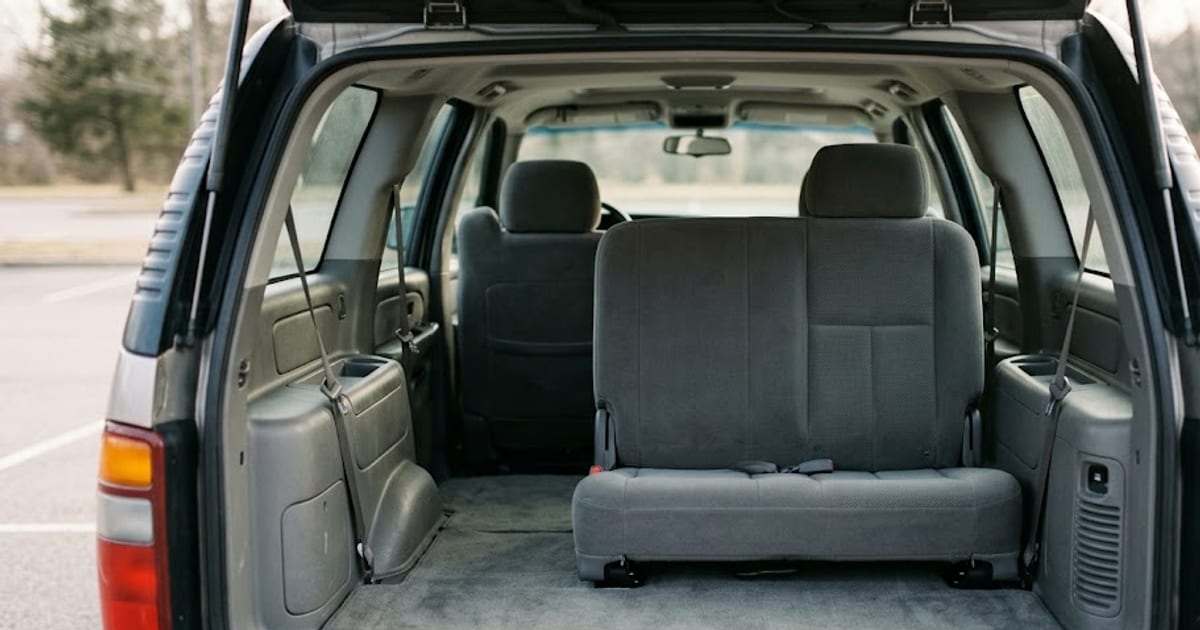
B0048 means the airbag control module has found a fault in the deployment circuit for the third-row right side airbag. The generic definition is "Third Row Right Side Airbag Deployment Control," and most scan tools add a suffix after a dash, a subfault, that says what kind of fault it is. The code applies to three-row vehicles whose restraint system includes an airbag protecting the right-hand seat in the third row, usually through a side curtain or a seat-mounted side airbag.
Severity: high for the occupant of that seat. Can you keep driving? Yes, but not with anyone in that seat if you can avoid it. When the airbag module finds a deployment circuit fault it lights the airbag lamp, and the airbag on that circuit may not deploy in a crash. The vehicle drives normally, which is why this code is easy to leave unfixed.
What a deployment circuit is
Each airbag has an igniter, often called a squib, with a small electrical resistance. The airbag control module sends a pulse through a pair of wires to that igniter to deploy the bag. Because it has to be certain the circuit will work when needed, the module constantly measures it: the resistance through the igniter, and whether either wire has a short to ground or to battery voltage. Anything outside the expected range sets a code for that position and disables that airbag.
B0048 is the position code for the third-row right side. Neighbouring codes cover other seating positions and other airbags, which is why an airbag scan can show a whole series of B00xx codes when a shared problem, such as a disturbed connector under a seat row, affects several circuits.
Reading the suffix
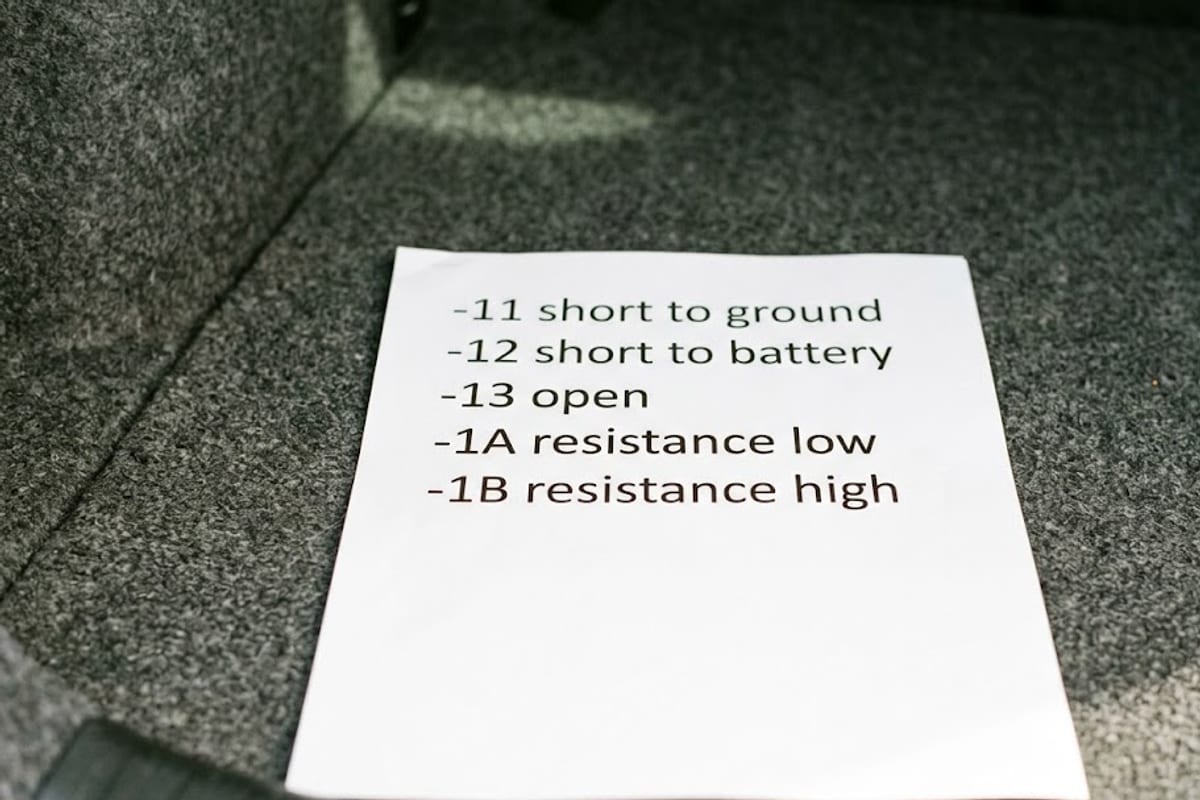
The two characters after the dash are a failure type byte from SAE J2012. For airbag deployment circuits, these are the ones seen most often:
- -11, circuit short to ground. One side of the circuit touches ground, usually through damaged insulation.
- -12, circuit short to battery. One side touches a power feed. This is less common and needs care.
- -13, circuit open. The circuit is broken, often at a connector that has come apart or was not reconnected after work.
- -1A, circuit resistance below threshold. The loop resistance is too low, often from two wires touching or a connector problem.
- -1B, circuit resistance above threshold. The loop resistance is too high, which in practice usually means a poor or corroded connection rather than a failed igniter.
Why the third row is prone to it
Third-row seats fold, tumble and come out, and the wiring beneath and beside them is disturbed far more often than wiring in the front of the car. Owners search for B0048 on Chevrolet and Ford three-row SUVs, where the circuit runs along the floor and up the rear pillar. The common findings are:
- A connector knocked loose or not fully latched, often after the seats were removed, a carpet was cleaned, or aftermarket equipment was fitted.
- Wiring pinched by a seat mechanism or trim panel.
- Corrosion from liquid, including drinks spilled in the third row and water leaking in from the tailgate or a rear window.
- Work on the rear pillar or headliner, such as fitting a rear entertainment system, which can disturb a curtain airbag connector.
- The airbag unit, occasionally, after damage.
- The airbag control module, rarely, and only after the circuit is proven good.
Working on it safely
Airbag circuits are designed to fire with a small current, and the people who get hurt working on them are usually the ones who probed a connector with an ordinary meter or ignored the waiting time. Follow the service information for your vehicle. In general terms:
- Switch the ignition off, disconnect the battery, and wait for the time the service information specifies before touching any airbag connector, so the module's reserve power has discharged.
- Do not measure an airbag igniter with an ordinary ohmmeter. Airbag circuits are tested with the manufacturer's procedure, usually with a load tool that substitutes for the airbag.
- Keep airbags you remove face up and away from heat and static.
A diagnostic order
- Read all airbag codes with their suffixes and status. Note whether B0048 is current or history. A history code that does not return after clearing may have been caused by a seat being moved with the ignition on.
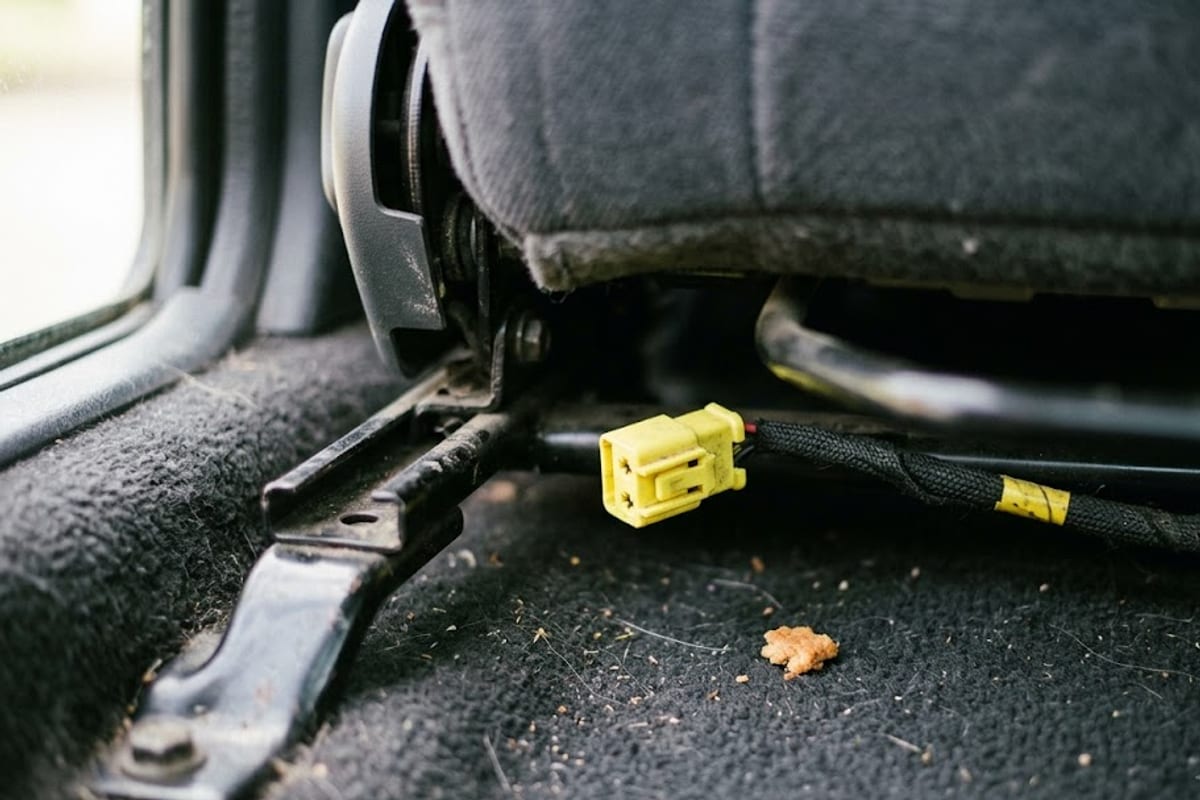
- Find the connectors for that circuit. Depending on the vehicle, they are under the third-row seat, behind the rear quarter trim or at the base of the rear pillar. Yellow connectors and yellow harness covering mark airbag circuits on most vehicles.
- Check that every connector is fully latched and that its locking tab is engaged. Many open-circuit and high-resistance codes end here.
- Inspect the harness along the seat and trim for pinching, chafing and liquid damage.
- Test the circuit with the manufacturer's procedure, substituting a load tool for the airbag to separate a wiring fault from an airbag fault.
- Replace parts only after the tests point to them.
After the repair
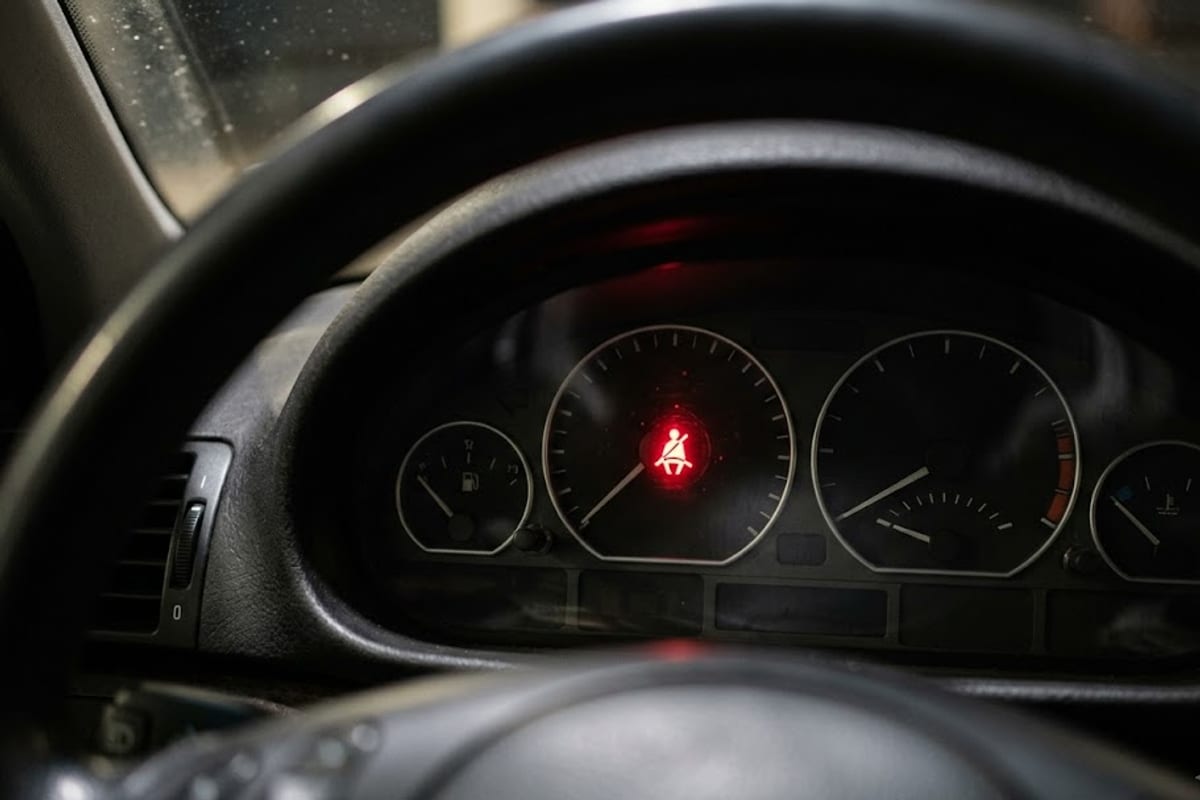
Reconnect the battery with nobody in the vehicle, switch the ignition on and watch the airbag lamp. It should light for a few seconds during the self-test and then go out. Clear the codes, then cycle the ignition and confirm the lamp behaves the same way again. The guide to what a trouble code does not tell you explains why a code names a circuit rather than a part, which matters here because the igniter itself is rarely the cause.
What the airbag module does when it finds the fault
The module does not switch the whole restraint system off. It disables the deployment circuit it cannot trust, keeps every other airbag and seat belt pretensioner armed, lights the warning lamp and stores the code. In a crash, the front airbags and the other side airbags still deploy as designed. Only the third-row right position is affected, which is why the risk falls on one seat rather than on everyone in the vehicle.
The lamp itself matters too. On most vehicles the airbag lamp stays lit for as long as any restraint fault is current, so a second fault that appears later, for example in a front seat belt pretensioner, gives no new warning. A lamp that has been on for months hides anything that has gone wrong since.
Buying a three-row vehicle with the airbag lamp on
Used three-row SUVs and minivans often reach the market with the airbag lamp lit and a vague explanation that "it is just a seat sensor." Before buying, ask for a full restraint system scan with suffixes. A B0048-13 traced to an unplugged connector under a seat is a short job. A code that points to a deployed or damaged airbag, or several deployment codes across the rear of the vehicle, suggests past damage that deserves a closer look at the vehicle's history.
Frequently asked questions
Can I drive with B0048?
The vehicle drives normally, but the third-row right side airbag may not deploy. Avoid seating anyone there until the fault is fixed.
Will B0048 clear itself?
A history code may stay stored until cleared with a scan tool. A current code will not clear until the circuit is fixed, and on many vehicles the airbag lamp stays on until then.
Is B0048 always the airbag itself?
No. Connectors and wiring cause most deployment circuit codes, especially in the third row where seats are moved often.
Can I test the airbag with a multimeter?
No. Do not measure an airbag igniter with an ordinary meter. Follow the manufacturer's procedure, which uses a load tool in place of the airbag.
Why did B0048 appear after the seats were removed?
Removing or folding third-row seats can disturb the airbag connector underneath. If the ignition was on while a connector was apart, the module stores the fault. Reconnect firmly, then clear and check again.
Sources: SAE J2012 code definitions and failure type byte descriptions.